Webinare & E-Learning Kurse Alle Webinare

Nutrition support will improve patient outcomes!

Nutrition support will improve patient outcomes!

Referent:In

gwwyr0799ky4hpr91q3hf0jhzo3kf5me.jpg

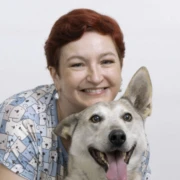
Stefanie Handl

DVM, Dipl. ECVCN

Stefanie Handl hat an der Vetmeduni Vienna Veterinärmedizin studiert, ihr Studium 2002 abgeschlossen und 2005 im Fach Tierernährung promoviert.
Von 2005 bis 2012 war sie Mitarbeiterin (PostDoc) am Institut für Tierernährung und an der Klinik für Kleintiere der Vetmeduni Wien.
In diese Zeit fiel auch ihre Prüfung zur Fachtierärztin für Ernährung und Diätetik im Jahr 2008, der 2009/2010 ein Forschungsaufenthalt im Gastrointestinal Laboratory, Texas A&M University folgte. 2011 legte Frau Handl die Prüfung zum Diplomate des European College of Veterinary and Comparative Nutrition (ECVCN) ab und ist seit Nov. 2011 auch Chefredakteurin der Wiener Tierärztlichen Monatsschrift.


Im Jahr 2013 erfolgte die Gründung der „Futterambulanz“, die sich der professionellen und unabhängigen Ernährungsberatung für Haustiere widmet.


Frau Handl ist (Co-)Autorin zahlreicher wissenschaftlicher Publikationen und Tagungsbeiträge. Zudem verfasst sie regelmäßig Veröffentlichungen für Tierärzte und Tierhalter und hält zudem Vorträge und Schulungen.
Buchungsinfo

Dauer: 0:50 h
Referent:In Stefanie Handl
ab 1
57,60 US$
(inkl. USt.)

Das könnte Sie auch interessieren

E_26_10_07_Feline quality of life _Supporting the owner and the patient_300x200.png
Kelly Eyre
1:00 h

Feline quality of life: Supporting the owner and the patient

How can we support quality of life when a patient’s needs change? Join Kelly Eyre to explore palliative care, quality-of-life assessment and compassionate caregiver communication, with a particular focus on feline patients.
E_26_12_09_Liquid Biopsy in Companion Animals_Pic2_300x200.png
09.12.2026 (UTC)
19:00 - 20:00 (UTC)

Liquid Biopsy in Companion Animals: What is currrent and what is on the Horizon

Liquid Biopsy is a minimally invasive technique to detect cancer early in dogs and cats, or to make a diagnosis. It may also be used to monitor therapy or to investigate potential relapse. 
feeding-senior-pets-for-nurses-1.jpeg
Stefanie Handl
0:57 h