Webinars & e-learning courses All webinars

Eye-mergencies - Management of urgent eye cases

Eye-mergencies - Management of urgent eye cases

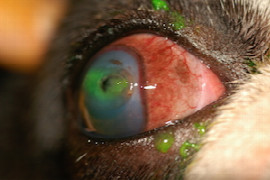
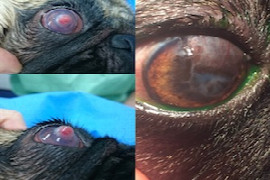
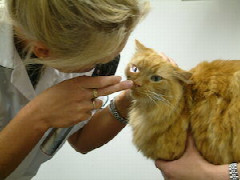
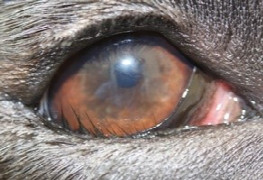
Correct identification and prompt treatment of sight-threatening eye conditions can save eyes! This webinar will describe how to perform a thorough eye exam with commonly available equipment, and will outline treatment options for frequently encountered ocular emergencies, including when to refer (and call in a specialist). Emergencies outlined will include acute glaucoma, lens luxation, corneal lacerations, melting ulcers and globe proptosis. The focus will be on providing different treatment options, particularly immediate stabilisation.

Language: English

In case you have missed this webinar, you have the opportunity to watch a recorded version here

Speaker:

Vicki Liddle.jpeg

Vicki Liddle

Vicki Liddle BVSc(Hons) MANZCVS(EMCC) FANZCVS(Ophthalmology)

A Brisbane local, Vicki graduated from the University of Queensland in 2007 with first class honours, the ASAVA Small Animal Medicine Award and the Australian Veterinary Practitioner Essay Prize. She then completed a rotating internship at Queensland Veterinary Specialists in 2008.

Following her passion, she undertook an ophthalmology internship and residency at Animal Eye Services within VSS Underwood. She worked as an ophthalmology registrar at the Small Animal Specialist Hospital in Sydney and returned to Brisbane and worked as an ophthalmologist at Brisbane Veterinary Specialist Centre and at Veterinary Specialist Services Jindalee currently.

She was awarded her membership of ANZCVS in emergency medicine and critical care in 2011 and her fellowship in veterinary ophthalmology in 2016. She has peer reviewed publications in the AVP, AVJ and Veterinary Ophthalmology.

Vicki enjoys all aspects of ophthalmology, particularly a surgical challenge and helping others understand the function and beauty of the eye.
Booking information

Duration: 1:13 h
Speaker: Vicki Liddle
from 1
54.90 US$
(incl. tax)

You might also be interested in

-146.jpeg
Sally Turner
0:45 h

Top Tips for your Ophthalmic Examination

Are you 100% confident with your ophthalmic examination? Are you getting the most from your ophthalmoscope? If the answers are not ‘yes100%’ then you need to listen to this Webinar.
issues-with-eyelids-for-nurses.jpeg
Sally Turner
1:05 h

Issues with eyelids

Diseases affecting the eyelids are frequently encountered in small animal practice, affecting both dogs and cats. We will briefly consider the anatomy and function of the eyelids before looking in more detail at medical and surgical conditions. With the former it is important to remember that eyelid disease can sometimes be part of a generalised condition – such as atopy, or can be secondary to another eye disease – blepharitis as an extension from a bacterial conjunctivitis for example. Conditions such as entropion and ectropion might require surgical correction and we will see examples of these with tips for how to achieve the best outcome for the patient – the aim is always to restore normal function with minimal scarring. A correct diagnosis and meticulous attention to detail is required to attain this. Other common conditions such as eyelid tumours and distichiasis will be mentioned, and we will finish up with a few complications - and how to avoid them!
approach-to-problematic-corneal-ulcers-2.jpeg
Brian Patterson
1:03 h

Approach to problematic corneal ulcers

To the practitioner there are two types of corneal ulcer - the uncomplicated and the complicated. Recognising negative healing factors and developing a logical approach to managing corneal ulcers will accelerate healing times, reduce visual impairment and increase client satisfaction. The aim of this talk is to simplify how we view corneal ulcers and to develop patient specific 'road maps' to ensure that we achieve the best clinical outcomes possible.