
Webinare & E-Learning Kurse All webinars

How to Deal with Ataxia in the Horse

How to Deal with Ataxia in the Horse

This presentation will address the clinical approach to ataxia in horses, from recognition to neuroanatomic localization. 

The main types of ataxia—spinal, cerebellar, and vestibular—will be reviewed, with emphasis on dynamic examination and lesion differentiation. Strategies for assessing mild or ambiguous cases and distinguishing ataxia from musculoskeletal or neuromuscular diseases will be discussed. 

Practical examples will highlight how a systematic evaluation improves diagnostic accuracy and decision-making in equine neurological cases.


This lecture was part of the DACH Conference 2025 and was originally held on December 12, 2025.

Language: English

1 hour according to § 10(2) of the ATF Statutes as mandatory continuing education for ATF members.
ATF hours are recognized by the ÖTK as educational hours.
Recognition according to the guidelines of the Society of Swiss Veterinarians is possible.

The accreditation of CE Points is approved under the condition of a positive completion of the test in the specified period and is valid from January 19, 2026 - January 19, 2027

Puhuja:
imwsj66kq4ywlj9c6spz7rwphxjoeqgx.jpg

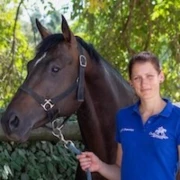
Marianne Depecker

DVM, PhD, Dipl ECEIM

Marianne Depecker is an equine internal medicine specialist (Dipl ECEIM) vet. She has been working since 2016 in a private practice in the South West of France, near Bordeaux. They handle a wide variety of internal medicine cases, primarily as second opinion but also as first opinion, within a diverse population of horses, ponies and donkeys from all disciplines.
Her areas of expertise include respiratory medicine, neurology, endocrinology, neonatalogy and gastroenterology.
She regularly hosts webinars as part of continuing education for equine and mixed practice veterinarians, and is a member of the internal medicine committee of the French Association of Equine Practioners (AVEF).
Booking information

Kesto: 0:43 h
Puhuja: Marianne Depecker
sivulta 1
57,60 USD
(sis. alv)

Voisit myös olla kiinnostunut

EN_27_01_13_EN_27_01_13_Reading thoracic radiographs of the dog and cat_300x200.png
13.01.2027 (UTC)
19:00 - 20:00 (UTC)

Reading thoracic radiographs of the dog and cat: how to go about?

In this webinar, Pete Mantis provides a practical, structured approach to interpreting canine and feline thoracic radiographs with greater confidence. Learn a systematic reading technique, review normal thoracic anatomy, and gain practical rules of thumb to identify abnormalities and avoid missing important findings.
Tierische Schmerztherapie_ Gehirn, Medikamente und Fürsorge.png
Emily Foot
0:59 h

An Opioid Masterclass: The What, When, Why and How of Opioids

As the most commonly used analgesic, alongside NSAIDS and with a broad spectrum of drug choice, this lecture is inspired by real questions from lectures and coveres all you need to know about opioid use!
RATO-300x200 (1).jpg
26.11.2026 (UTC)
19:00 - 20:00 (UTC)

RATO - Rovesti Abduction Trochanteric Osteotomy - Rationale and early clinical results

Early canine hip dysplasia where joint laxity alone causes femoral head subluxation: a more localised alternative to DPO/TPO. Rationale and early results of RATO, with Gian Luca Rovesti