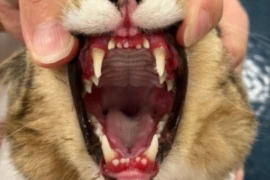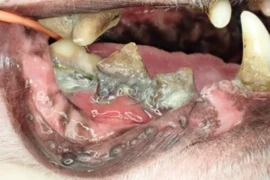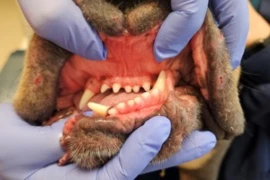

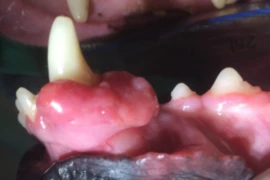
This webinar explores oral neoplasia in cats and dogs, focusing on three key questions that guide accurate prognosis and effective treatment decisions.
What the tumor is?
To determine the nature of the tumor biopsy is performed - ideally following computed tomography (CT) to best plan the biopsy area, avoid superficial inflammation and any areas of necrosis.
How extensive it is?
What we see usually underestimates the extent of the lesion and advanced imaging is the key. Pre- and post-contrast CT of the head is the golden standard. Magnetic resonance imaging (MRI) can also be considered.
Is there metastatic disease?
If the tumor is malignant in its' nature, evaluation of the regional lymph nodes and distant organs is needed to complete the staging.
Evaluation of regional lymph nodes may be challenging and currently bases on the sentinel lymph node detection/excision. PET/CT is becoming available in veterinary medicine as well. Staging is completed with evaluation of distant organs for possible metastatic disease, with thoracic CT and an abdominal ultrasound or full-body CT.
Language: English
CE Hours:
Referent:In

Ana Nemec
DVM, PhD, Dipl. AVDC, Dipl. EVDC, Assist. Prof.
Ana Nemec graduated as a Doctor of Veterinary Medicine from the University of Ljubljana, Slovenia in 2004. She continued with a multi-disciplinary PhD program in Biomedicine at the University of Ljubljana, focusing on research in the systemic effects of periodontal disease, while working as a veterinarian at the Small Animal Clinic of the Veterinary Faculty, University of Ljubljana.
She was awarded her PhD in 2009 and completed her 3-year residency training in Dentistry and Oral Surgery at the University of California-Davis, USA in 2012. Ana passed her Board examination and became a Diplomate of American Veterinary Dental College (AVDC) in 2013 and has also been accepted to the European Veterinary Dental College (EVDC).
Ana has been appointed as an Assistant Professor at the Veterinary Faculty, University of Ljubljana, Slovenia since 2012. In 2018 Ana was a veterinary specialist at Animal Hospital Postojna, Slovenia. In 2019 she returned to the Small Animal Clinic of the Veterinary Faculty, and launched also her consultancy company in veterinary dentistry ananemec.si.
Ana is a member of several national and international organizations, an active member of AVDC and EVDC, a member of the European Veterinary Dental Society and recipient of several national and international awards in veterinary medicine, an Associate Editor of the journal Veterinary Dentistry and Oromaxillofacial Surgery, a reviewer in several international journals, and author of research and professional papers. Ana’s main research interest is in oral biology. She is also a keen speaker, a passionate teacher and an enthusiastic traveller.