

First international guidelines on canine cognitive dysfunction
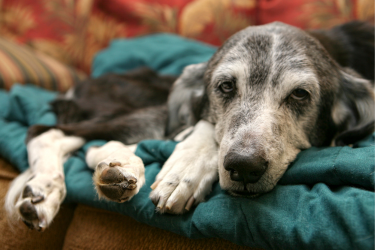
As dogs live longer, age-related diseases become more common. New international guidelines on Canine Cognitive Dysfunction Syndrome (CCDS) provide structured criteria for diagnosis and monitoring.
Our patients are living longer – and with them, the clinical questions and disease patterns we encounter in daily practice are changing.
A decade ago, an 11-year-old medium-sized dog was already considered a senior. Today, such a dog is often still a regular patient in everyday practice. This shift is even more pronounced in cats: it is now common for cats to reach 14 to 15 years of age or more, leading to a marked increase in age-associated diseases.
A current example of this development is the first international guidelines for the diagnosis and monitoring of Canine Cognitive Dysfunction Syndrome (CCDS), published in December 2025 in the Journal of the American Veterinary Medical Association.
The guideline defines CCDS as a chronic, progressive, age-associated neurodegenerative disorder characterised by clinical changes in behaviour, orientation, sleep–wake cycles, social interaction and activity – often described as a dementia-like syndrome in dogs.
For the first time, the guideline provides standardised diagnostic criteria and practical approaches for recognising and monitoring CCDS in everyday clinical settings. For practitioners, this represents a milestone: until now, there has been no unified consensus on how to diagnostically classify this common yet subtly progressive condition.
Why CCDS matters – and what the guideline states
CCDS is not a rare exception. On the contrary, with advancing age it becomes a clinical factor we encounter regularly. Similar to Alzheimer’s disease in humans, the symptoms are often non-specific and develop gradually.
Different behavioural domains help assess cognitive health. The DISHAA domains describe six areas:
- Disorientation
- Social interaction
- Sleep–wake cycle
- House soiling
- Activity
- Anxiety
The new guideline proposes classifying CCDS across several stages of severity based on these clinical patterns. Early stages are often subtle and may only become apparent through thorough history-taking.
What this means for practice
For us, this means that geriatric medicine challenges us not to dismiss neurological changes as “normal ageing,” but to assess them systematically. Standardised screening tools and structured diagnostic criteria support earlier recognition and enable well-founded counselling of owners.
At the same time, the guideline makes it clear that CCDS is a clinically relevant syndrome – not merely a “pet owner perception.”
This development aligns with other trends: our patients live longer, many are no longer routinely neutered, and they reach advanced ages with increasingly complex health needs. Gynaecological and andrological preventive care, chronic disease processes, long-term medication and multisystemic comorbidities are no longer marginal topics, but part of daily reality.
The guideline also calls for careful clinical judgement:
CCDS is complex, behavioural changes can have many underlying causes, and thorough differential diagnosis remains essential.
Standardised criteria are a tool – not a substitute for clinical experience and comprehensive history-taking.
Continuing education as a response to increasing complexity
What this current scientific progress shows is clear: as medical knowledge advances and our patient population ages, our responsibilities grow accordingly. To competently diagnose and manage age-associated syndromes such as CCDS, we need not only experience, but also continuous professional development.
Clinical guidelines, structured diagnostic frameworks and a reflective approach to long-term consequences are now integral parts of modern, responsible practice.
VET Medizin addresses precisely these topics: not only what is changing, but how we as veterinarians respond – scientifically sound, clinically relevant and practical.