
Webinars All webinars

Paraneoplastic Syndrome

Paraneoplastic Syndrome

Cancer can do anything.....Paraneoplastic syndrome are symptoms that occur at sites distant from a tumour or its metastasis. During this seminar, we will explore the categories of paraneoplastic syndromes and explain the mechanisms of those where it is elucidated. We will look at the comparative aspect of paraneoplastic syndrome in human medicine.

Recording from 13 November 2019

Speaker:
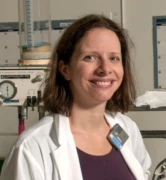
Dr.Valerie-Poirier.jpg

Valerie J. Poirier

Dr. Valérie J. Poirier DVM, DACVIM (Oncology)

I was born in Quebec, Canada and graduated from University of Montreal in 1998.  I started working at the University of Wisconsin in 1999 where I acquired her Diplomate of the American College of Veterinary Internal Medicine (Oncology) in 2003. From there, I moved to Switzerland and began work at the University of Zurich in 2003 working as a Medical and Radiation Oncologist and acquired Diplomate status of the American College of Veterinary Radiology (Radiation Oncology) in 2006. In 2007 I moved to Australia and joined the team at Brisbane Veterinary Specialist Centre and helped built the first radiation facility for pets in the southern hemisphere. I moved to Guelph, Canada in August 2011 and was part of the Animal Cancer Centre as a radiation oncologist.  In July 2015, I moved back to the South Pacific as a senior lecturer in medical oncology at Massey University in New Zealand.  I moved back to the University of Guelph in July 2019 where iI am an assistant professor in radiation oncology.

Booking information

Duration: 0:45 h
Speaker: Valerie J. Poirier
from 1
Free
You might also be interested in

veterinary-gb0489bee6_1920300x200.jpg
Penny Thomas
0:51 h

Supportive Care for Cancer Patients for Nurses

How to provide the best nursing care for patients with cancer 
tumor-grading-and-prognosis-in-veterinary-practice-1.jpeg
Sara Belluco
0:44 h

Tumor grading and prognosis in veterinary practice

Tumors are quite frequent in companion animals, with malignant forms representing 56% of all the tumors in dogs and 80% in cats. Predicting the survival time and treatment response for malignant tumors is necessary to evaluate the best care options for the animal. Histological tumor grading helps veterinarians to define the prognosis, but each tumor has its own grading system with different prognosis, in terms of survival rate, metastatic rate, recurrence incidence. It could be not so easy to get your bearings in the pathologic words of gradings. The goal of this seminar is to be able to correlate the validated prognosis to each tumor grading we will see. We will rapidly review what tumor grading is and how it is evaluated. Then we will spend some time to review some of the most important tumor gradings (mammary tumors, mast cell tumors, melanomas, soft tissue sarcomas) and the correlated and validated prognostic factors. At the end of the seminar you will be able to clearly understand your pathologist’s report based on the grading system, and to use it to give an appropriate prognosis to the owners.
webinar-pic 3x2.jpg
Stephanie Colthurst
0:51 h

Common Malignancies of the Skin - Mast Cell Tumors and Soft Tissue Sarcomas in Dogs and Cats

Tumors of the skin and subcutaneous tissues are the most common malignancies in dogs and cats accounting for over 30-40% of tumors in dogs and 29% in cats...