Webinars & e-learning courses All webinars

Anaesthesia secrets: the latest best practice for brachycephalic dogs

Anaesthesia secrets: the latest best practice for brachycephalic dogs

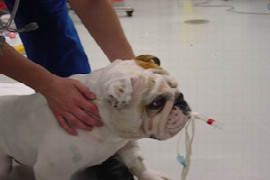
The brachycephalic breeds have become very popular worldwide in recent years. The anaesthetic management of these dogs represent challenges before, during and after any surgical or diagnostic procedure. Independently if they are going to be anaesthetized for a procedure related to the brachycephalic syndrome, or for something totally unrelated (elective or an emergency), these animals have some particular characteristics that makes them more susceptible of developing complications. Additionally, many of these patients have further comorbidities (e. g. hiatal hernia, laryngeal paralysis, etc) making the anaesthetic very demanding. In this webinar, we will discuss the safest approach and how to maximize the success in these cases.

Recording from 11.04.2018

Speaker:

preview_Fernando_Martinez_200x200_913247ce20.jpg
Fernando_Martinez_200x200.jpg

Fernando Martinez-Taboada

DVM, CertVA, DipECVAA, MRCVS

Fernando graduated in Spain and worked for a number of years in small animal practice and research both in Spain and the UK. He did an internship and then a residency in anaesthesia and analgesia at the University of Bristol. He obtained the Certificate in Veterinary Anaesthesia by the RCVS in 2007 and became a European Diplomate in Veterinary Anaesthesia and Analgesia in 2011 (ECVAA).
Over the years, Fernando has worked as an anaesthesiologist at both private and university teaching hospitals in the UK and Australia (Cambridge University and the University of Sydney), and he was head of anaesthesia and analgesia at various referral hospitals in the UK. He returned in 2017 to the University of Sydney to lead the anaesthesia and analgesia service. His areas of interest are;
• Local anaesthetics: Epidural and spinal anaesthesia, development of novel technical approaches and anaesthetic combinations, electrical and ultrasonographic nerves location, perineural and wound soaking catheters.
• Analgesia in chronic and oncological pain, including interventional pain management.
• Intensive care, especially ventilation (physiology, practical aspects, uses in anaesthesia and ICU, and equipment).
Booking information

Duration: 0:55 h
Speaker: Fernando Martinez-Taboada
from 1
54.90 US$
(inkl. tax)

You might also be interested in

E_25_11_06_It's more than a score- The Happy Catty Pain Pie_300x200.png
Emily Foot
0:52 h

Masters of Disguise: Recognising and Managing Feline Pain

Join Emily Foot RVN as we explore the subtle and often overlooked signalments of pain in cats, highlighting their instinctive ability to mask discomfort. This session introduces the ‘Happy Catty Pain Pie’ - a practical, visual tool designed to help veterinary professionals identify pain more effectively. 


E_25_06_05_Exploring the critical role of surgical nursing in patient recovery_300x200.png
Flick Caldwell
0:57 h

Exploring the critical role of surgical nursing in patient recovery

Throughout this lecture, we will explore with Flick Caldwell the vital role of the surgical nursing team in monitoring critical patients throughout the postoperative period.
E_25_09_03_Pokes and Scopes- Endoscopy Anaesthesia_Website_200x300.png
Courtney Scales
1:00 h

Pokes and Scopes: Endoscopy Anaesthesia

Despite endoscopic procedures are minimally invasive, general anaesthesia is required, and this is the source of many potential complications. A webinar with Courtney Scales.