Webinars All webinars

Approach to canine mast cell tumours and soft tissue sarcomas

Approach to canine mast cell tumours and soft tissue sarcomas

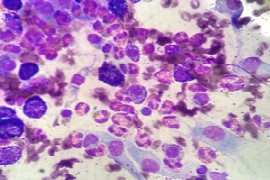
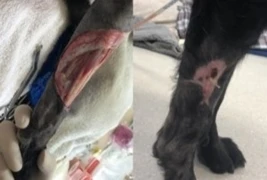
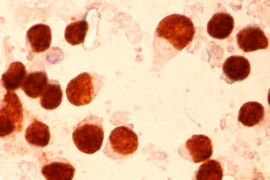
Mast cell tumours (MCT) and soft tissue sarcomas (STS) are some of the most common tumours encountered in small animal practice. Although surgical removal is often the most appropriate initial treatment, questions like whether or not to perform staging tests prior to surgery, identification of cases where surgery may not be recommended, treatment options for non-surgical cases, interpretation of prognostic factors and the best approach for follow up can be more challenging. In this webinar we will discuss initial diagnosis of canine MCT and STS, when and which staging tests are appropriate for different cases, interpretation of histopathology reports and grading schemes, and non-surgical treatment options. We will discuss in more depth the use of receptor tyrosine kinase inhibitors such as Palladia in canine MCT.

This webinar is sponsored by ASAP Laboratory.

Recording from 31.07.2018

Speaker:

Claire_Canonn_portrait_photo.jpg

Claire Cannon

Claire Cannon BVSc (hons) DACVIM (Oncology) MANZCVS

Claire graduated from the University of Melbourne in 2003 and spent several years in general practice in Australia and the United Kingdom before deciding to specialise. During her internship, she worked veterinary oncologists for the first time and realised that there are always options for animals with cancer, ranging from surgery, radiation therapy and chemotherapy to palliative or comfort care, and she decided that oncology was the career path for her. She moved to the United States in 2009 to undertake a residency in veterinary oncology at the University of Minnesota. She became board certified in 2013 and went on to undertake additional training in research. She was an Assistant Professor at the University of Tennessee from 2013-2015 and the University of Minnesota from 2015-2017. She has authored multiple peer-reviewed journal articles and presented her research at several international conferences. Claire is delighted to be home in Australia and at U-Vet Animal Hospital. She is passionate about providing excellent care to all animals with cancer, and their owners, with a focus on maintaining the best quality of life possible for her patients. She is also excited to contribute to the training of our future veterinarians and to continue her research.

Booking information

Duration: 1:03 h
Speaker: Claire Cannon
from 1
54.90 US$
(incl. tax)

You might also be interested in

chemotherapy-precautions-and-safety-why-how-and-what-to-do-for-nurses-1.jpeg
Momoko Ito
0:45 h

Chemotherapy Precautions and Safety - Why, How and What to do (for Nurses)

Cancer frequently affects our veterinary patients and in recent years chemotherapy has become more commonly utilised treatment. General practices are increasingly prescribing and administering chemotherapy drugs. Chemotherapy drugs are toxic to cells (cytotoxic) interfering with the normal cell life cycle which results in cell death. Cancer cells are targeted by these drugs however they are not specific for cancer cells and healthy tissue can be affected. Chemotherapy drugs are also carcinogenic, mutagenic, teratogenic and abortifacient. It is important that these drugs are handled safely. Personnel handling of chemotherapeutic drugs have been found to have increased risks of infertility, early pregnancy loss or urinary excretion of these drugs. This webinar will discuss the safety precautions necessary for handling chemotherapy agents and will focus on the recent consensus guidelines produced by the American College of Veterinary Internal Medicine (ACVIM) in January 2018 to raise awareness of risks and how we can reduce the exposure within clinics. If time permits, common side effects (neutropaenia, thorombocytopaenia and gastrointestinal side effects) caused by chemotherapy will be explained as well as precautions for handling such patients.
paraneoplastic-syndrome-1.jpeg
Valerie J. Poirier
0:45 h

Paraneoplastic Syndrome

Cancer can do anything..... Paraneoplastic syndrome are symptoms that occur at sites distant from a tumour or its metastasis. During this seminar, we will explore the categories of paraneoplastic syndromes and explain the mechanisms of those where it is elucidated. We will look at the comparative aspect of paraneoplastic syndrome in human medicine.
webinar-pic 3x2.jpg
Stephanie Colthurst
0:51 h

Common Malignancies of the Skin - Mast Cell Tumors and Soft Tissue Sarcomas in Dogs and Cats

Tumors of the skin and subcutaneous tissues are the most common malignancies in dogs and cats accounting for over 30-40% of tumors in dogs and 29% in cats...