Webinars & e-learning courses All webinars

Diagnosis and management of lumbosacral disease

Diagnosis and management of lumbosacral disease

Lumbosacral disease is a common and debilitating disease in large breed dogs which can be difficult to diagnose. Many of the clinical signs of LS disease are shared with other orthopedic conditions and it is essential that the clinician performs a thorough and targeted orthopedic and neurological exam. Whilst the most common cause of LS pain in large breed dogs is degenerative lumbosacral stenosis, plain and advanced imaging allow identification of differential diagnoses such as diskospondylitis, neoplasia and osteochondrosis. In DLSS, the cause of the dogs pain has to be determined by specific etiology, be it dorsal compression, lateral compression, retrolisthesis etc. Only then can surgical or conservative regimes be correctly targeted. This webinar will go through the diagnostic pathway and look at recent developments in the diagnosis and management of this common condition.

Language: English

In case you have missed this webinar, you have the opportunity to watch a recorded version here.

This webinar qualifies for one (1) hour of continuing education.

Speaker:
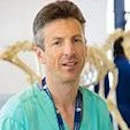
Andrew_Worth_130x130.jpg

Andrew Worth

BVSc, MANZCVS(Radiology), PGDipVCS, FANZCVS(SA Surgery)

Andrew graduated from Massey University in 1990 and has worked in both Australia, the UK and NZ as a small animal veterinarian. In 1999 he completed membership examination of the Australian College of Veterinary Scientist in Radiology. From 2000-2003 he completed a residency in small animal surgery at the Massey University Veterinary Teaching Hospital, and he became a Fellow of the Australian College of Veterinary Scientists in 2006. In 2015 he competed a PhD on Hip Dysplasia and Lumbosacral disease in German shepherd Police dogs. He is currently an Associate Professor and Registered Specialist in Small Animal Surgery at the Massey University Veterinary Teaching Hospital.
He has published over 30 articles in peer-reviewed journals and presented at veterinary conferences in Europe, Asia, the US and Australia. His current research interests include working dog orthopaedic disease, lumbosacral degeneration and biomaterials for surgery. His clinical interests include minimally invasive surgery and advanced surgical technologies. Andrew is the convenor for the NVZA Hip and Elbow Dysplasia Panels and chairman of the Massey University Working Dog Centre.
Booking information

Duration: 0:49 h
Speaker: Andrew Worth
from 1
57.60 US$
(inkl. tax)

You might also be interested in

E_2026_06_02_From gut leak to survival- Evolving clinical strategies and insights in canine septic peritonitis_300x200.png
Elena Regine Moldal
1:14 h

From gut leak to survival: Evolving clinical strategies and insights in canine septic peritonitis

From suspicion to survival: Elena Regine Moldal will talk about clear pathways for canine and feline septic peritonitis—when to cut, new markers for guiding therapy, and knowledge that improves outcomes.
Image 02.12 300x200 (1)300.jpg
02.12.2026 (UTC)
09:00 - 10:00 (UTC)

Anaesthesia Considerations for Thoracic Trauma Patients for Nurses

VN's play a vital role in the management of patients with thoracic trauma. In this webinar, Kate Hatcher will discuss approaches for safe and effective administration of anaesthesia in these challenging cases
E_25_10_01_Neurology in first opinion practice- what to do when you can't refer_300x200.png
Alexander Forward
0:55 h

Neurology in first opinion practice: what to do when you can't refer

A case based video tour provided by Alexander Forward looking at some common neurological cases you might encounter in practice and how best to deal with them.