Webinars & e-learning courses All webinars

Mechanical Ventilation: The Basics

Mechanical Ventilation: The Basics

Mechanical ventilation is becoming a common therapeutic tool in veterinary medicine. Mechanical ventilation is often necessary in cases of hypoxic or hypercapnic respiratory failure, shock, coma, or cardiac arrest. In this seminar, we will discuss the mechanics of ventilation, the different ventilatory modes (pressure and volume controlled), their strengths, limitations, similarities and differences, we will also discuss their indications, and we will learn how to set up and adjust the setting for our patients. This seminar is centred around the concept of lung-protection and the open-lung theory.

Finally, we will use a couple of ventilator models as example for the configuration setting up.

This is a dynamic seminar with great and practical videos that will help you understand what is happening in the lungs when we program certain parameters in the ventilator. Finally, we will discuss about the patient weaning from the ventilator and the best strategies to achieve a positive outcome in these patients.

Recording from 06.05.2020

Speaker:
preview_Fernando_Martinez_200x200_913247ce20.jpg
Fernando_Martinez_200x200.jpg

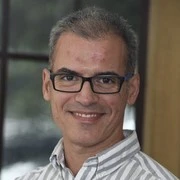
Fernando Martinez-Taboada

DVM, CertVA, DipECVAA, MRCVS

Fernando graduated in Spain and worked for a number of years in small animal practice and research both in Spain and the UK. He did an internship and then a residency in anaesthesia and analgesia at the University of Bristol. He obtained the Certificate in Veterinary Anaesthesia by the RCVS in 2007 and became a European Diplomate in Veterinary Anaesthesia and Analgesia in 2011 (ECVAA).
Over the years, Fernando has worked as an anaesthesiologist at both private and university teaching hospitals in the UK and Australia (Cambridge University and the University of Sydney), and he was head of anaesthesia and analgesia at various referral hospitals in the UK. He returned in 2017 to the University of Sydney to lead the anaesthesia and analgesia service. His areas of interest are;
• Local anaesthetics: Epidural and spinal anaesthesia, development of novel technical approaches and anaesthetic combinations, electrical and ultrasonographic nerves location, perineural and wound soaking catheters.
• Analgesia in chronic and oncological pain, including interventional pain management.
• Intensive care, especially ventilation (physiology, practical aspects, uses in anaesthesia and ICU, and equipment).
Booking information

Duration: 1:01 h
Speaker: Fernando Martinez-Taboada
from 1
57.60 US$
(inkl. tax)

You might also be interested in

E_25_06_05_Exploring the critical role of surgical nursing in patient recovery_300x200.png
Flick Caldwell
0:57 h

Exploring the critical role of surgical nursing in patient recovery

Throughout this lecture, we will explore with Flick Caldwell the vital role of the surgical nursing team in monitoring critical patients throughout the postoperative period.
E_25_11_06_It's more than a score- The Happy Catty Pain Pie_300x200.png
Emily Foot
0:52 h

Masters of Disguise: Recognising and Managing Feline Pain

Join Emily Foot RVN as we explore the subtle and often overlooked signalments of pain in cats, highlighting their instinctive ability to mask discomfort. This session introduces the ‘Happy Catty Pain Pie’ - a practical, visual tool designed to help veterinary professionals identify pain more effectively. 


E_2026_02_19_Immune-mediated Polyarthritis - When to suspect, what to rule out and what to treat with_300x200-2.png
Craig Breheny
1:00 h

Immune-mediated polyarthritis - when to suspect, what to rule out and what to treat with

Immune-mediated polyarthritis can affect many body systems and prove a diagnostic challenge. With abundant underlying triggers, Craig Breheny will talk about how deciding on a work up plan, and the associated therapeutic interventions can be a challenge.