Webinars & e-learning courses All webinars

Using Passive Range of Motion in the Canine Patient (for Nurses)

Using Passive Range of Motion in the Canine Patient (for Nurses)

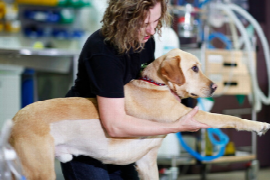
Passive Range of Motion (PROM) has long been used as ‘Physiotherapy’ or ‘Rehabilitation’, often being performed by Vet Nurses in the Vet clinic.
This presentation provides up to date science on PROM, its uses, benefits, risks and contra-indications. Discussion will also include the difference between active ROM, passive ROM and stretching and how you choose which one to perform on any given patient.
Specific clinical examples will be provided and protocols for use in the clinic and for patients home instructions.
These include: orthopedic surgery such as Cruciate and Patella Surgery, Elbow Surgery, Femoral Head and Neck Excision surgery, Spinal surgery & other neurologically affected patients, management of senior pets.

Recording from 15.01.2020

Speaker:
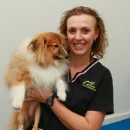
Michelle_Image.png

Michelle Monk

Michelle Monk BPhysio (Hons), MAnSt (AnimalPhysio), DipMyoTher, APAM

Michelle has been an Animal Physiotherapist for 17 years. After graduating initially as a Human Physiotherapist and Myofascial Trigger Point Therapist, she loved helping people but wanted to take her passion for dogs into her work, so she completed a Masters Degree in Animal Physiotherapy. As one of the great pioneers of the Canine rehabilitation Industry in Australia, she started the first Canine Physiotherapy and Hydrotherapy Centre for dogs in Victoria in 2002.  Since then she has helped hundred of thousands of dogs to move better, feel better and for many, she has saved their lives, helping them to walk again.
Since opening the first clinic she has dedicated her time to helping as many dogs as possible have access to quality rehabilitation services through her various rehabilitation clinics and now through her Canine Health & Wellbeing Academy.
She has educated many physiotherapists, vets and nurses in the area of canine physiotherapy, hydrotherapy and remedial massage, both here in Australia and internationally. She believes providing high quality education and mentorship to therapists is paramount if we are to develop a group of therapists who have a high level of skills and knowledge, this ensuring our dogs have access to the best care possible.
Booking information

Duration: 0:50 h
Speaker: Michelle Monk
from 1
54.90 US$
(incl. tax)

You might also be interested in

chronic-pain-management-in-small-animals-a-physiotherapy-approach-1.jpeg
Brooke Williams
1:00 h

Chronic Pain Management in small animals - A Physiotherapy Approach

Pain management in dogs and cats has undergone a dramatic evolution in the past decade. As pets live longer, with advances in veterinary medicine chronic pain is becoming an increasingly common presentation. However, our ability to recognise and treat it is still in its infancy. Pain is said to be chronic if it persists beyond the normal healing time of about three months. It is a complex phenomenon and may not be easy to treat, especially with analgesia alone. The role of physiotherapy in managing chronic pain is challenging. Physiotherapy aims to restore function and movement and therefore assist with pain management whilst treating the patient as a whole system rather than a localised painful focus. Owner involvement is key to assessment and treatment. This approach must always be multimodal incorporating several specialists to bring the best benefits. Australian physiotherapists are highly skilled practitioners who use scientific evidence based research to manage and improve pain. They are the musculoskeletal experts, however they also treat neuropathic pain and neurological conditions. In this webinar we will discuss the signs of chronic pain in small animals, discuss a multi-disciplinary holistic approach to management including therapeutic modalities, manual therapies, exercise therapy and the psychosocial aspects of pain management.
1403 300x200 (1).png
Lindsey Connell
0:44 h

Postoperative Rehabilitation following Cruciate Surgery for Nurses

Post operative rehabilitation following cruciate surgery...
Picture2.jpg
Elaine Cebuliak
0:54 h

Massage and Acupressure in Practice for Nurses

Therapeutic massage aids rehabilitating an animal following cruciate, spinal, abdominal or any orthopaedic surgical procedure. It also teaches owners and their dogs to relax and be calm, which is important in any dog training.