In this webinar, attendees will learn the pathophysiology of an increased intracranial pressure; in particular increased intracranial pressure secondary to traumatic brain injury. Further, they will learn strategies to ensure optimal perianesthetic care for these patients is achieved.
Increased intracranial pressure is, unfortunately, not uncommon in the veterinary field. Whether secondary to traumatic brain injury, intracranial lesion, or cerebral ischemia, these patients offer a challenging management picture particularly when general anesthesia is required. For many of these pets, general anesthesia and/or sedation is needed for imaging and diagnostics as well as supportive care (e.g. mechanical ventilation). Without general anesthesia these patients have an increased risk of morbidity and mortality, this is even more of a risk in the perianesthetic period.
It is important that not only are the appropriate steps undertaken to ensure appropriate anesthetic management but that other comorbidities that can be present with trauma, vascular events, or intracranial lesions are considered and treated as well.
Management of these patients can be complicated but does not need to be intimidating. By considering and treating the pet for its pathologies we can minimize the adverse effects of anesthetic agents while still ensuring that the best level of diagnostics and care can be performed safely.
Recording from 18.02.2020
Speaker:
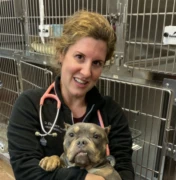
Elizabeth Goudie-DeAngelis
Elizabeth Goudie-DeAngelis DVM, MS, DACVAA