Webinars & e-learning courses Intermediate All webinars

So much pressure! Understanding and treating glaucoma

<span class="navbar-label">So much pressure! Understanding and treating glaucoma</span>

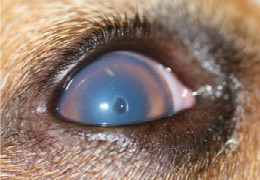
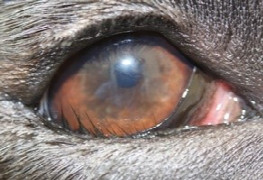
Canine glaucoma is a serious eye condition in dogs characterized by increased intraocular pressure, which can lead to optic nerve damage and vision loss. It may be primary, stemming from genetic predisposition, or secondary due to other eye diseases or trauma. Common symptoms include redness, excessive tearing, cloudiness of the eye, and behavioral changes like pawing at the eye. Early diagnosis and treatment are critical, often involving medication or surgery, to manage the pressure and preserve vision. Regular veterinary check-ups can help detect this condition before it leads to severe complications.

Language: English

Recorded: 11.02.2025

1 hour according to § 10(2) of the ATF Statutes as mandatory continuing education for ATF members.
ATF hours are recognized by the ÖTK as educational hours.
Recognition according to the guidelines of the Society of Swiss Veterinarians is possible.

The accreditation of CE Points is approved under the condition of a positive completion of the test in the specified period and is valid from February 11, 2025 - February 11, 2026

Speaker:

Ron Image.jpg

Ron Ofri

DVM, PhD, DEVCO

Ron Ofri was a member of the charter class of the Koret School of Veterinary Medicine, Hebrew University of Jerusalem, Israel. Upon his graduation, he traveled to the University of Florida, where he trained in veterinary ophthalmology and obtained his Ph.D. He then returned to Israel and joined his alma mater, where he is currently a Professor of Veterinary Ophthalmology, winner of numerous Teacher of the Year awards, and author of more than 100 refereed papers. Ron is also a very popular international speaker, having been invited to talk in more than 40 countries, in continuing education seminars, national meetings, and world congresses for general practitioners, including BSAVA, WSAVA, WVC, and NAVC, as well as advanced courses in his research fields of retinal electrophysiology and visual optics. Ron is a contributing author to the Gelatt's classic textbook Veterinary Ophthalmology (3rd, 4th, 5th, and 6th editions) as well as a co-author of the popular textbook Slatter's Fundamentals of Veterinary Ophthalmology (4th, 5th, and 6th editions). Ron is a Diplomate of the European College of Veterinary Ophthalmology (ECVO), a former ECVO Executive Board member and in 2002-2005 he served as President of the European Society of Veterinary Ophthalmology 

Booking information

Duration: 0:54 h
Speaker: Ron Ofri
from 1
54.90 US$
(inkl. tax)

You might also be interested in

good-and-bad-eye-ulcers-when-to-worry.jpeg
Anu O'Reilly
1:21 h

Good and Bad Eye Ulcers - When to Worry?

A corneal ulcer is an inflammatory condition of the cornea in-volving loss of its outer layer. In veterinary medicine, the term corneal ulcer is a generic name for any condition involving the loss of the outer layer of the cornea, and as such is used to describe conditions with both inflammatory and traumatic causes. Corneal ulcers are one of the most common eye dis-eases in dogs. They are caused by trauma, detergent burns, and infections.
E_24_12_03_The_eye_is_an_innocent_bystander_Picture_Vlearn_300x200.png
Ron Ofri
0:52 h

The eye is an innocent bystander. Ocular manifestations of systemic diseases

In this talk Prof. Ron Ofri will help you to improve your diagnostic and clinical skills, as you will learn to recognize systemic diseases based on their ocular manifestations.
issues-with-eyelids-for-nurses.jpeg
Sally Turner
1:05 h

Issues with eyelids

Diseases affecting the eyelids are frequently encountered in small animal practice, affecting both dogs and cats. We will briefly consider the anatomy and function of the eyelids before looking in more detail at medical and surgical conditions. With the former it is important to remember that eyelid disease can sometimes be part of a generalised condition – such as atopy, or can be secondary to another eye disease – blepharitis as an extension from a bacterial conjunctivitis for example. Conditions such as entropion and ectropion might require surgical correction and we will see examples of these with tips for how to achieve the best outcome for the patient – the aim is always to restore normal function with minimal scarring. A correct diagnosis and meticulous attention to detail is required to attain this. Other common conditions such as eyelid tumours and distichiasis will be mentioned, and we will finish up with a few complications - and how to avoid them!