Webinars & e-learning courses All webinars

The Clinical and Pathophysiological Aspects of Feline Lung-Digit Syndrome

The Clinical and Pathophysiological Aspects of Feline Lung-Digit Syndrome

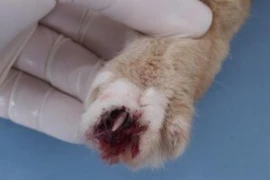
Feline Oncology can be a challenging discipline and clinicians need to understand the natural history of tumours to understand clinical presentation and management. The lifestyle of cats often presents further challenges as clinical features of disease are recognised at a very advanced stage. Lung - digit syndrome in cats is a syndrome commonly associated with lung cancer. In this webinar we will explore clinical presentation and pathophysiology of this condition and how it can be managed. More broadly we will examine the management of lung cancer in cats and other tumours that are associated with the respiratory system. This includes prognosis and management, including palliation.

Recording from 22 June 2023

Speaker:

David.jpeg

David Argyle

Professor, Vice Principal and Head of College of Medicine and Veterinary Medicine
David Argyle is a graduate of Veterinary Medicine and Surgery from the University of Glasgow. He gained his PhD in Immunology and Oncology from the same Faculty. He has served as a clinical academic veterinary oncologist for the Universities of Glasgow, Wisconsin-Madison and Edinburgh. He is an RCVS and European recognized specialist in veterinary oncology and his major interests are cancer biology and comparative oncology. He has published over 160 papers relating to veterinary oncology and written textbook chapters that have underpinned our understanding of canine and feline cancer biology. In 2011 he was appointed William Dick chair of Veterinary Clinical Studies and Dean of Veterinary Medicine at The Royal (Dick) School of Veterinary Studies. In 2022 he was appointed to be Vice Principal and Head of College of Medicine and Veterinary Medicine at the University of Edinburgh, leading 3000 academic staff and 5 research Institutes. In 2016 he was appointed a Fellow of the Royal College of Veterinary Surgeons and, in the same year, a Fellow of the Royal Society of Edinburgh for meritorious contributions to knowledge. He was appointed a Fellow of the Royal Society for the Arts in 2018. In 2015 he was awarded the Kennel Club International Prize for his work to advance the understanding of canine disease.

Booking information

Duration: 0:40 h
Speaker: David Argyle
from 1
54.90 US$
(inkl. tax)

You might also be interested in

lumbectomies 300x200.png
Barney Dean
1:07 h

Don't Get Stumped by Lumps - Approaching Tricky Lumpectomies 

This webinar will discuss the rationale behind sound investigation and management of tricky mass removals, and how to adapt a plan to suit owner circumstances. 
 
ICC image small.jpg
Sue Jaensch
0:50 h

Advanced diagnostics in canine and feline lymphoma.

So you have a diagnosis of lymphoma in your small animal patient. What next?  Classification of lymphoma is increasingly important for both prognostic and therapeutic decision making. This webinar will discuss diagnostic options to optimise the diagnostic process in your patient.  Modalities discussed will include immunocytochemistry, immunohistochemistry, flow cytometry and PARR. 
staging-the-oncology-patient.png
Laura Brockley
0:57 h

Staging the Oncology Patient

Staging is one of the most important components of oncology case management. It involves determining the extent of local disease along with the presence or absence of regional or distant metastasis. The results of staging are used to give more accurate and informed treatment options along with prognostic information for each oncology patient. Some of the biggest challenges in staging is to consider how much staging is required for each case, which are the most appropriate tests, and if the results of these tests will impact treatment options and prognosis. I will discuss this information in a case-based and evidence-based approach, focusing on some of the more common cancers including canine mast cell tumours, lymphoma, oral tumours and apocrine gland anal sac adenocarcinomas.