Webinars All webinars

Causes of secondary dilated cardiomyopathy in dogs

Causes of secondary dilated cardiomyopathy in dogs

This session will discuss the pathophysiology, diagnostic options and therapeutic options for commonly encountered causes of secondary dilated cardiomyopathy phenotypes in dogs. Following this session, participants should be:
• Familiar with current terminology and sources of information related to the most commonly encountered causes of dilated cardiomyopathy phenotypes in dogs
• Able to describe the most commonly encountered non-inherited etiologies that cause dilated cardiomyopathy phenotypes in dogs
• Able to recognize the clinicopathologic findings most commonly associated with dilated cardiomyopathy phenotypes due to various non-inherited etiologies in dogs
• Able to generate appropriate diagnostic plans to document and characterize dilated cardiomyopathy phenotypes due to various non-inherited etiologies in dogs
• Familiar with the therapeutic options available for treating dilated cardiomyopathy phenotypes due to various non-inherited etiologies in dogs

Recording from 7 July 2022

Speaker:
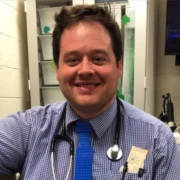
Michael Aherne Image.jpg

Michael Aherne

Dr. Michael Aherne, MVB (Hons 1), GradDipVetStud, MS, MANZCVS (Small Animal Surgery), DACVIM (Cardiology)
Dr. Michael Aherne is a Clinical Assistant Professor of Cardiology at the University of Florida College of Veterinary Medicine. He is originally from Ireland where he graduated with a first-class honors degree in Veterinary Medicine from University College Dublin. After graduating, he subsequently spent several years in small animal general practice in Queensland, Australia before completing his rotating internship at the University of Sydney in Australia where he also completed a Graduate Diploma in Veterinary Clinical Studies and was also successfully admitted by examination as a Member of the Australian and New Zealand College of Veterinary Scientists in 2012. Following a brief return to private practice in Sydney, he then moved to the USA to complete his cardiology residency as well as a Master’s degree in Biomedical and Veterinary Science at the Virginia-Maryland College of Veterinary Medicine, Virginia Tech and became a Diplomate of the American College of Veterinary Internal Medicine (Cardiology) in 2017, following which, he took up his current position at the University of Florida. His areas of interest include cardiac surgery, interventional cardiology, congenital cardiac disease, electrophysiology, advanced cardiac imaging techniques and veterinary education. 

Booking information

Duration: 1:21 h
Speaker: Michael Aherne
from 1
54.90 US$
(incl. tax)

You might also be interested in

11.12 300x200 (1).png
Lauren Kirby
0:57 h

Reading Between the Lines - The Art of ECG Interpretation for Veterinary Nurses

Electrocardiography (ECG) is an invaluable monitoring and diagnostic tool, but interpreting waveforms can often feel overwhelming—like trying to decipher a secret code! presented by Lauren Kirby
physiology-of-the-cardiovascular-system-what-a-veterinary-nurse-needs-to-know-1.jpeg
Niek Beijerink
0:36 h

Physiology of the cardiovascular system – what a veterinary nurse needs to know

During this webinar Dr. Niek Beijerink will discuss the application of normal cardiac anatomy and physiology. First, an overview of the circulatory system will be provided, information will be provided on normal heart sounds, as well as information on the normal electrocardiogram. Second, a few case examples will be discussed, applying the normal physiological principles.
300x200.jpg
Lauren Holland
1:06 h

Get Rhythm: A Nurse’s Guide to ECG’s

ECG’s can be daunting, it is an area of veterinary nursing that is not taught in great detail and one that is sometimes avoided because it is poorly understood. This webinar will go back to basics; where better to start than at the beginning?