Webinars & e-learning courses All webinars

Equine Metabolic Syndrome and pituitary pars intermedia dysfunction

Equine Metabolic Syndrome and pituitary pars intermedia dysfunction

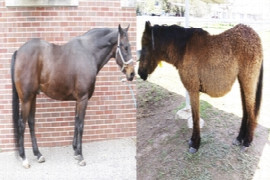
Equine Metabolic Syndrome (EMS) and pituitary pars intermedia dysfunction (PPID) and are the most common hormonal disorders in adult horses. Although both conditions have been described worldwide, those diseases have a specific significance in Australia; for instance, in Queensland, it has been shown that more than 20% of aged horses are suffering from PPID and that more than a third of them are also suffering from EMS.
Both conditions have a huge impact on equine health as they both result in laminitis. Laminitis is a painful and incurable condition, and even though it has been a major burden on the equine industry for many years, there is still no adequate treatment. Therefore, prevention of the first painful episode of laminitis is critical when managing horses at risk of developing hormonal dysregulation.
This presentation will review the current understanding of both EMS and PPID and will also describe the diagnostic tests that can be used to improve the early detection of horses at risk. Finally, this presentation will discuss the different therapeutic options available.

This webinar is sponsored by ASAP Laboratory

Recording from 04.04.2018

Speaker:

picture_Bertin.jpg

François-René Bertin

DVM, MS, PhD

François-René graduated with a DVM from the National Veterinary School of Nantes (France). After completing an internship in equine medicine and surgery at the National Veterinary School of Alfort (France), François-René trained in Equine Internal Medicine at the Purdue University College of Veterinary Medicine (USA) and became a diplomate of the American College of Veterinary Internal Medicine (ACVIM). During his residency, François-René developed an expertise in equine endocrinology and authored several research articles on insulin dysregulation in horses. He then completed a PhD in vascular physiology at McGill University (Canada). After his PhD, François-René worked as an Equine Internal Medicine specialist at the Equine Hospital of The University of Montreal (Canada) before joining The University of Queensland as a Senior Lecturer in Equine Internal Medicine.
François-René is a member of the Equine Endocrinology Focus Group, an international panel of experts in equine endocrinology, as well as a member of the Equine Endocrinology Special Interest Group of the American College of Veterinary Internal Medicine.
Booking information

Duration: 0:51 h
Speaker: François-René Bertin
from 1
57.60 US$
(inkl. tax)

You might also be interested in

Indications_for_mechanical_ventilation_300x200_1_300x200.png
Corrin Boyd
1:14 h

Indications for Mechanical Ventilation

This session with Corrin Boyd covers the basic principles on the use of mechanical ventilation in small animal critical care
E_26_10_07_Feline quality of life _Supporting the owner and the patient_300x200.png
Kelly Eyre
1:00 h

Feline quality of life: Supporting the owner and the patient

How can we support quality of life when a patient’s needs change? Join Kelly Eyre to explore palliative care, quality-of-life assessment and compassionate caregiver communication, with a particular focus on feline patients.
EN_27_01_13_EN_27_01_13_Reading thoracic radiographs of the dog and cat_300x200.png
13.01.2027 (UTC)
19:00 - 20:00 (UTC)

Reading thoracic radiographs of the dog and cat: how to go about?

In this webinar, Pete Mantis provides a practical, structured approach to interpreting canine and feline thoracic radiographs with greater confidence. Learn a systematic reading technique, review normal thoracic anatomy, and gain practical rules of thumb to identify abnormalities and avoid missing important findings.