Webinars & e-learning courses All webinars

Feline Arterial Thromboembolism

Feline Arterial Thromboembolism

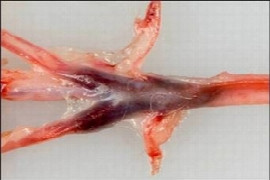
Arterial thromboembolism (ATE) in cats most frequently occurs when a thrombus that develops within the left atrium embolizes a remote site. The most common site is the aortic trifurcation, resulting in abrupt occlusion of blood supply to the hind limbs and ischemia of a large muscle mass. In most cases ATE is a devastating complication of serious underlying heart disease. In this webinar I will discuss the most important aspects of ATE (diagnosis, prognosis, therapy, prevention) in a case-based and evidence-based approach.

Recording from 24.09.2019

Speaker:

Niek_headshot.jpg

Niek Beijerink

Niek Beijerink, DVM, PhD DECVIM

Niek Beijerink graduated with a veterinary degree from Utrecht University in The Netherlands. He completed a PhD (canine endocrinology and reproduction) in 2007 and then a residency in Small Animal Cardiology in 2010. He is a Diplomate of the European College of Veterinary Internal Medicine (Cardiology). In 2011 Niek commenced working as a Specialist in Small Animal Cardiology at Sydney University and is responsible for the clinical service and teaching in this area. Some of his active research interests are heart failure therapy, cardiac CT imaging, and genetics of mitral valve disease. In 2018 Niek moved back to The Netherlands, while he continues to hold a part-time position at Sydney University.

Booking information

Duration: 0:44 h
Speaker: Niek Beijerink
from 1
54.90 US$
(incl. tax)

You might also be interested in

Webp.net-resizeimage (20).png
Chris Linney
0:57 h

Is it just an innocent murmur? Congenital Heart Disease in Puppies and Kittens & Cats (for Nurses)

Heart murmurs in young puppies and kittens are often managed incorrectly. We know that a delay in the diagnosis of congenital heart disease can mean incorrect treatments and cause a major impact on longer term prognosis. This webinar will help guide the veterinary team through the assessment, management and prognosis of commonly encountered congenital heart diseases with plenty of practical tips and tricks for improving your knowledge on the subject. It also aims to give delegates confidence when discussing these congenital conditions with owners and colleagues. Learning Objectives: • How to identify animals that may have congenital heart disease • Understand the most appropriate tests and how to perform these well in young animals • Improve ability to detect and understand the significance of a murmur • Prognosis and treatment options available for the common congenital heart conditions seen
Slow and unsteady image (1).jpg
Andrew Fisher
0:33 h

Slow and unsteady - Understanding bradyarrhythmias for Nurses

In this presentation Andrew Fisher aims to give an overview of bradyarrhythmias for nurses who work in general practice. 
300x200.jpg
Lauren Holland
1:06 h

Get Rhythm: A Nurse’s Guide to ECG’s

ECG’s can be daunting, it is an area of veterinary nursing that is not taught in great detail and one that is sometimes avoided because it is poorly understood. This webinar will go back to basics; where better to start than at the beginning?