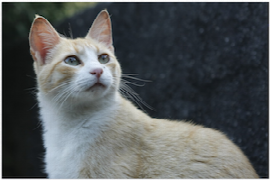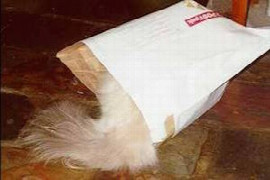
Why does my cat do that? Cats are fascinating creatures to live with but sometimes their behaviour intrigues, perplexes and even frustrates owners. In this webinar we will look at ways of increasing your understanding and knowledge of their behavior.
Language: English
In case you have missed this webinar, you have the opportunity to watch a recorded version here.
Speaker:

Kersti Seksel
Dr Kersti Seksel BVSc (Hons) MRCVS MA (Hons) FACVSc DACVB DECAWBM
Kersti graduated in Veterinary Science from Sydney University. She has a BA in Behavioural Sciences with a major in psychology as well as a Master of Arts (Hons). She is a Fellow of the Australian and New Zealand College of Veterinary Scientists in Animal Behaviour, a Diplomate of the American College of Veterinary Behaviorists and a Diplomate of the European College of Animal Welfare and Behavioural Medicine.
Kersti is the principal of a specialist practice in behavioural medicine in Sydney, Australia. She teaches the distance education course in Behavioural Medicine for Centre for Veterinary Education (University of Sydney) and is an adjunct associate professor at Charles Sturt University. She has presented at numerous conferences nationally and internationally and has written many text book chapters, written a book, Training Your Cat, is a regular presenter on ABC radio and is a consultant on VIN (Veterinary Information Network).
Kersti is the principal of a specialist practice in behavioural medicine in Sydney, Australia. She teaches the distance education course in Behavioural Medicine for Centre for Veterinary Education (University of Sydney) and is an adjunct associate professor at Charles Sturt University. She has presented at numerous conferences nationally and internationally and has written many text book chapters, written a book, Training Your Cat, is a regular presenter on ABC radio and is a consultant on VIN (Veterinary Information Network).
Booking information
Duration:
0:46 h
Speaker:
Kersti Seksel
from 1
54.90 US$
(incl. tax)