Webinars & e-learning courses All webinars

I think the dog has bone cancer. What's next?

I think the dog has bone cancer. What's next?

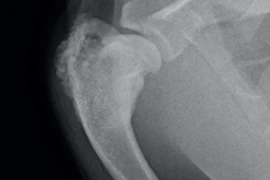
A dog presents to you limping. You take an x-ray and discover an aggressive bone lesion. You suspect a primary bone tumour. What are the differential diagnoses? What next?

As a vet, you will encounter a dog with an aggressive appendicular bone lesion on x-rays. Most dogs will have osteosarcoma, but other types of cancers, benign lesions and infection are possible.

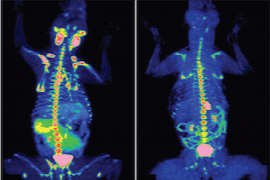
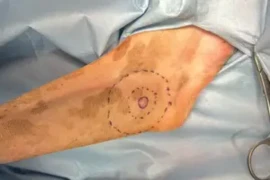
This webinar will go through how to diagnose and stage a dog with an aggressive appendicular bone lesion on x-rays. It will provide an overview of canine osteosarcoma with an emphasis on biologic behaviour, signalment, risk factors, cause, and clinical presentation. The main focus is on identifying and understanding the prognostic factors and treatment options available for both nonmetastatic and metastatic appendicular osteosarcoma in dogs. A few clinical examples and questions will be provided throughout. By the end of the webinar, veterinarians know more about how to approach a dog with an aggressive bone lesion on x-rays, and how to manage dogs with appendicular osteosarcoma.

Recording from 11 February 2021


Speaker:

Catherine Image.jpg

Catherine Chan

DVM, CHAN BVSC (HONS I), FANZCVS (Veterinary Oncology)

Catherine is a Veterinary Oncologist based in Brisbane, Australia. After graduation in 2009, Catherine completed an internship and worked in both emergency and general practice, before moving to Sydney in 2012 to complete a three-year residency in Veterinary Oncology. Catherine has also spent time in the USA at the University of Missouri and Colorado State University. She has completed both her American (ACVIM) and Australian (ANZCVS) Veterinary Oncology training. Catherine is currently the director and consultant for an online Veterinary Oncology Consultancy Service ‘The Pet Oncologist’, where she provides veterinarians worldwide remote pet cancer advice and support. She also consults with pet owners directly one day a week at Veterinary Specialists in Underwood. In her spare time, she likes to spend time with her two little boys and sometimes she likes to spend time with her husband and cat.

Booking information

Duration: 0:56 h
Speaker: Catherine Chan
from 1
54.90 US$
(inkl. tax)

You might also be interested in

canine-mast-cell-tumors-1.jpeg
Evi Pecceu
0:43 h

Canine Mast Cell Tumours

Canine mast cell tumours are common in general practice. The diagnosis is usually straightforward by means of fine needle aspiration; however, management can be challenging due to the variable behaviour ranging from locally infiltrating lesions to aggressive mast cell tumours metastasising to the liver and spleen. As a consequence, outcomes range from weeks to years. The aim of the webinar is to focus on the use of prognostic factors to predict the behaviour of mast cell tumours and to guide management of each individual case. Once the extent of disease and likely prognosis has been established, a plethora of treatment options need to be considered including surgery, radiation therapy, chemotherapy, targeted therapy, palliative supportive care as sole or multi-modal therapy. Dogs with a good prognosis should be offered treatment options aimed at long term control, whereas the focus for dogs with a poor prognosis might need to be palliative. The second part of the webinar is focused on highlighting when to consider which treatment options.
Picture1.jpg
Penny Thomas
0:48 h

Hemangiosarcoma – Beyond Surgery

Presented by Dr Penny Thomas, Haemangiosarcoma - treatment options
staging-the-oncology-patient.png
Laura Brockley
0:57 h

Staging the Oncology Patient

Staging is one of the most important components of oncology case management. It involves determining the extent of local disease along with the presence or absence of regional or distant metastasis. The results of staging are used to give more accurate and informed treatment options along with prognostic information for each oncology patient. Some of the biggest challenges in staging is to consider how much staging is required for each case, which are the most appropriate tests, and if the results of these tests will impact treatment options and prognosis. I will discuss this information in a case-based and evidence-based approach, focusing on some of the more common cancers including canine mast cell tumours, lymphoma, oral tumours and apocrine gland anal sac adenocarcinomas.