Webinars & e-learning courses All webinars

Nursing the end-stage cancer patient 

Nursing the end-stage cancer patient 

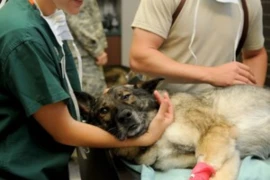
As veterinary patients age, they are more susceptible to diseases and cancer. This webinar will cover the basic cancer biology, treatment options and palliative care. In addition, pain management, anti-inflammatory drugs, common medications and feeding guidelines as well as a quality-of-life scale will be discussed. The goal is to make the patient as comfortable as possible. Educating clients how to assess the quality of life and recognise pain is important, it is also a nurses’ role to be able to recognise those in patients. The journey is not easy, but it may be rewarding. Knowledge is the power to be able to help and improve the welfare and the quality of patient care. 

The Australian Veterinary Nurse and Technician (AVNAT) Regulatory Council has allocated (1) AVNAT CPD point to this continuing education activity. 

Recording from 28 September 2021

Speaker:

BVSCMomokoIto_image.jpg

Momoko Ito

VTS (Oncology)

Momoko is from Japan and moved to Brisbane in 2006. She completed a Bachelor of Veterinary Technology at the University of Queensland in 2011. She has worked in general practice before working at Brisbane Veterinary Specialist Centre. She started as a full-time rotating nurse at BVSC in 2011, then became BVSC's Primary Chemotherapy Nurse in 2013. Momoko also volunteered at the RSPCA Wildlife Hospital every Saturday for one year as well as taking casual shits at the BVECCS Emergency Centre.
In June 2018, Momoko passed the exam to become a Veterinary Technician Specialist (VTS) in Oncology accredited by the Academy of Internal Medicine Veterinary Technicians in the US. She is currently the first and the only VTS (Oncology) in Australia. Her daily goal is to give our patients the best attentions and care, and also to be the better communication bridge between owners and veterinarians to achieve a good quality of life in cancer patients. Her interest is not only limited to Oncology but also Internal Medicine and Feline Behaviour and Handling.
Momoko grew up with 4-6 cats. She admits being a crazy cat lady who also loves dogs. She enjoys yoga, indoor soccer and occasional hiking.
Booking information

Duration: 0:53 h
Speaker: Momoko Ito
from 1
54.90 US$
(inkl. tax)

You might also be interested in

chemotherapy-precautions-and-safety-why-how-and-what-to-do-for-nurses-1.jpeg
Momoko Ito
0:45 h

Chemotherapy Precautions and Safety - Why, How and What to do (for Nurses)

Cancer frequently affects our veterinary patients and in recent years chemotherapy has become more commonly utilised treatment. General practices are increasingly prescribing and administering chemotherapy drugs. Chemotherapy drugs are toxic to cells (cytotoxic) interfering with the normal cell life cycle which results in cell death. Cancer cells are targeted by these drugs however they are not specific for cancer cells and healthy tissue can be affected. Chemotherapy drugs are also carcinogenic, mutagenic, teratogenic and abortifacient. It is important that these drugs are handled safely. Personnel handling of chemotherapeutic drugs have been found to have increased risks of infertility, early pregnancy loss or urinary excretion of these drugs. This webinar will discuss the safety precautions necessary for handling chemotherapy agents and will focus on the recent consensus guidelines produced by the American College of Veterinary Internal Medicine (ACVIM) in January 2018 to raise awareness of risks and how we can reduce the exposure within clinics. If time permits, common side effects (neutropaenia, thorombocytopaenia and gastrointestinal side effects) caused by chemotherapy will be explained as well as precautions for handling such patients.
veterinary-gb0489bee6_1920300x200.jpg
Penny Thomas
0:51 h

Supportive Care for Cancer Patients for Nurses

How to provide the best nursing care for patients with cancer 
paraneoplastic-syndrome-1.jpeg
Valerie J. Poirier
0:45 h

Paraneoplastic Syndrome

Cancer can do anything..... Paraneoplastic syndrome are symptoms that occur at sites distant from a tumour or its metastasis. During this seminar, we will explore the categories of paraneoplastic syndromes and explain the mechanisms of those where it is elucidated. We will look at the comparative aspect of paraneoplastic syndrome in human medicine.