Webinars & e-learning courses All webinars

In-house Blood Tests - Artefacts and Interferences (for Nurses)

In-house Blood Tests - Artefacts and Interferences (for Nurses)

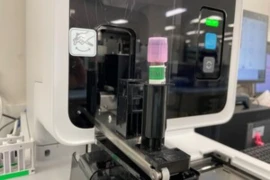
In-house blood testing is regularly performed in veterinary practice. However, in order to assess the results correctly, you must have an understanding of the potential artefacts and interferences which may affect the blood test results including haematology, biochemistry and endocrine testing. It is also important to evaluate any abnormal results in light of clinical context. This webinar will cover some of the more common artefacts and interferences which may affect blood test results as well as illustrating how all results should be interpreted in light of clinical context. 

The Australian Veterinary Nurse and Technician (AVNAT) Regulatory Council has allocated (1) AVNAT CPD point to this continuing education activity. 

Recording from 23 February 2023

Speaker:

Brett.jpg

Brett Stone

DVM, BVSc (Hons), BBiomedSc (Hons), M.Phil, MACVSc

Prior to commencing BVSc studies, Brett completed a Bachelor of Biomedical Sciences with Class I Honours at James Cook University, North Queensland. Brett graduated as a veterinarian from the University of QLD with Class I Honours in 2001 and worked in mixed animal practice on the outskirts of Brisbane for two years before returning to the University of QLD to undertake an internship/residency funded by QML Vetnostics in veterinary pathology. As a pathology intern Brett also concurrently undertook a research master’s project investigating the colonisation and excretion of E.coli serotype O157 in adult cattle. In 2006, after completing the internship, Brett lectured in clinical pathology at the University of QLD, was a contracted pathologist at QML Vetnostics and attained membership qualifications with the Australian College of Veterinary Scientists in Veterinary Pathology. In 2007-2008, Brett worked as a diagnostic pathologist at Cytopath Ltd in the UK, then returning to QML Vetnostics in 2008. After a brief hiatus, Brett accepted the role of supervising pathologist at Vetnostics in 2014. Brett has extensive experience in cytology and histopathology with special interest in immunohistochemistry and immunocytochemistry. In 2015, Brett successfully passed the American College of Veterinary Pathologist examinations and is a diplomat of the American College of Veterinary Pathologists in Clinical Pathology.

Booking information

Duration: 1:00 h
Speaker: Brett Stone
from 1
54.90 US$
(inkl. tax)

You might also be interested in

-why-do-we-vaccinate-when-should-we-vaccinate-for-nurses-1.jpeg
Aaron Herndon
0:55 h

“Why Do We Vaccinate? When Should we Vaccinate?” (for Nurses)

In this webinar we will discuss some of the underlying principles of why we vaccinate that underpin our preventative healthcare strategy for most of our patients. How do we select the most appropriate vaccine protocol for a particular patient? How frequently should we booster vaccine? Should we titre test? How do we fit modified vaccination protocols into a preventative medicine strategy if client perceptions of preventative medicine programs are limited to, “I’m just here for the needles.” There is no one-size-fits-most answer to any of these questions, but by the end of the webinar, we hope you feel equipped to answer client and colleague questions about why we do what we do.
help-my-patient-has-arrested-an-introduction-to-cpr-for-nurses.jpeg
Yvonne Van Der Veek
0:47 h

Help, my patient has arrested! An introduction to CPR (for Nurses)

In this webinar we will review the RECOVER ( Reassessment Campaign on Veterinary Resuscitation) guidelines for Cardiopulmonary Resuscitation. In practice CPR is fortunately not often required but when it does occur it can be a stressful event for everyone involved. The aim of this seminar is to leave you feeling more confident when dealing with a situation when your patient has arrested. For the scope of this seminar we will focus on Basic Life Support. Advanced Life Support falls out of the scope of this webinar but will be briefly discussed. You will learn how to recognize and assess cardiopulmonary arrest and how to respond to this appropriately. The principles of Basic Life Support will be covered step by step, both in a single rescue situation and a team situation. This includes chest compressions and discussing chest compression points in different breeds and species, intubation and ventilation. These guidelines will help you deal with any CPR code in your practice.
Image 26.03 300x200 (1).jpg
Cert IV TAE, RVN, AVN, DipVN (ECC), RN, BSc, Biological and Biomedical
0:45 h

Glyc-What - Explaining the Fundamental Role of the Endothelial Glycocalyx for Nurses

Revisiting a little bit of anatomy and physiology to gain an understanding in how this dynamic microstructure has become an important consideration when delivering IVFT to our patients.