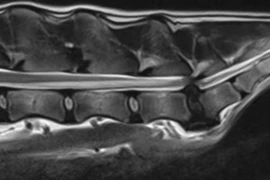
This vet-webinar reviews the aetiology, diagnosis and management of degenerative lumbosacral stenosis. Lumbosacral stenosis occurs when soft tissue and/or bony changes impinge on the nerve roots or vasculature of the cauda equina. The impingement can be worsened in conjunction with abnormal motion of the lumbosacral joint. Lumbosacral stenosis occurs most frequently in middle-aged dogs of medium to large breed, and German Shepherd dogs are predisposed to this disease. Common signs are lumbosacral pain, lameness, pelvic limb weakness and ataxia, and urinary incontinence. Diagnosis is based on clinical features and imaging studies. Depending on the severity of the compression but about 50% of dogs respond well to conservative treatments. Decompressive surgery is effective in most patients.
Recording from 22 September 2020
Speaker:

Dorothee Krainer
Dr.med.vet. Dorothee Krainer Dipl.ECVS, European Specialist in Small Animal Surgery; MBA Candidate WU Executive Academy