Webinars & e-learning courses Intermediate All webinars

The Pressure is on - The Highs and Lows of Glaucoma

The Pressure is on - The Highs and Lows of Glaucoma

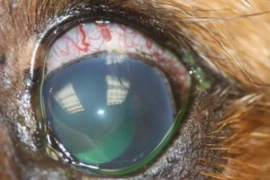
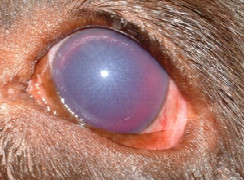
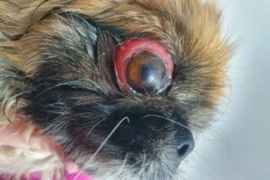
Glaucoma is unfortunately a common presentation in dogs, less so in cats. Sadly it is often diagnosed too late for us to be able to preserve vision - or even the eye sometimes. This webinar will aim to address this by alerting participants to the tell tale signs to watch for, including any predisposing factors which might make the patient at a higher risk of developing the condition. We will discuss the types of glaucoma and how to differentiate them, as well as considering the pathogenesis. Both emergency treatment and long term management options will be covered.

After the webinar participants should be much more confident in their diagnosis and ability to spot cases with this devastating ocular problem. As such they will be in a better position to treat their patients.

Recorded 4 September 2025

Speaker:

Sally_Image.JPG

Sally Turner

MA, VetMB, DVOphthal, MRCVS, RCVS, Specialist in Veterinary Ophthalmology

Sally Turner qualified from the University of Cambridge in 1991.  She spent 2 years in small animal practice before taking up a Residency in Comparative Ophthalmology as GDBA Fellow at the Animal Health Trust, Newmarket.  She gained her Certificate in Ophthalmology in 1994 and then the Diploma in 1997.  She is an RCVS Recognised Specialist in Veterinary Ophthalmology and currently works in London in private referral practice. In addition to providing a full ophthalmology referral service for client’s pets she is also a member of the BVA/KC/ISDS Eye Testing Panel which provides a screening service for inherited ocular disease in dogs prior to breeding.  She has been on the RCVS Ophthalmology Board and has acted as an RCVS Examiner for both Certificate and Diploma examinations as well as examiner for the European School of Veterinary Postgraduate Studies (ESVPS) and for the BSAVA modular Certificate in Ophthalmology. Sally regularly lectures to veterinary surgeons and nurses, both in the UK and abroad. She is the author of two books on veterinary ophthalmology.  She is interested in all aspects of clinical ophthalmology, especially surgical conditions and inherited ophthalmic disease. 

Booking information

Duration: 1:06 h
Speaker: Sally Turner
from 1
54.90 US$
(inkl. tax)

You might also be interested in

this-dog-has-glaucoma-what-do-i-need-to-know-and-do-1.jpeg
Sally Turner
0:58 h

This dog has glaucoma – what do I need to know and do?

In this webinar we will discuss canine glaucoma – discovering that it is not a simple disease but a complex problem with many potential causes which will have an impact on our approach to treatment. So, we will look at examples of acute and chronic glaucoma in the dog and reflect on the primary and secondary aetiologies before considering how best to approach management. An understanding of the mechanisms for the production, flow and drainage of aqueous from the eye is necessary to fully appreciate these different types of glaucoma. Illustrations of the different clinical presentations will be included together with mention of the breed predispositions to glaucoma which we encounter. We will concentrate on medical management and how to assess response to treatment but will briefly mention the surgical options available. By the end of the webinar you should be more confident in diagnosing the condition and understand what you need to do for the patient.
issues-with-eyelids-for-nurses.jpeg
Sally Turner
1:05 h

Issues with eyelids

Diseases affecting the eyelids are frequently encountered in small animal practice, affecting both dogs and cats. We will briefly consider the anatomy and function of the eyelids before looking in more detail at medical and surgical conditions. With the former it is important to remember that eyelid disease can sometimes be part of a generalised condition – such as atopy, or can be secondary to another eye disease – blepharitis as an extension from a bacterial conjunctivitis for example. Conditions such as entropion and ectropion might require surgical correction and we will see examples of these with tips for how to achieve the best outcome for the patient – the aim is always to restore normal function with minimal scarring. A correct diagnosis and meticulous attention to detail is required to attain this. Other common conditions such as eyelid tumours and distichiasis will be mentioned, and we will finish up with a few complications - and how to avoid them!
understanding-the-canine-fundus-part-2-pathological-changes-CL1474499510.jpeg
Guy Clare
0:51 h

Understanding the Canine Fundus - Part 2 'pathological changes'

This webinar will focus on the pathology of the fundus. By the end of this webinar you will be hoping that your next case will be an 18 year-old hyperthyroid cat!