

Veterinary Cardiology continuing education for veterinarians
The heart is always part of the clinical picture.
Whether a patient is presented for vaccination, coughing, weakness, poor growth, a routine check, an emergency consultation or pre-anaesthetic assessment, we often have to decide very quickly: Does this animal have a cardiac problem — or not?
A heart murmur, an arrhythmia, abnormal lung sounds, weak pulses, pale mucous membranes, exercise intolerance, syncope, respiratory distress, a history of travel to heartworm regions or a breed predisposition can all point towards cardiac disease.
That is where good veterinary cardiology continuing education becomes valuable. It helps veterinarians keep an overview, recognise relevant clinical signs, choose appropriate diagnostic tests and make more confident decisions about diagnosis, treatment and long-term management.
Not every veterinarian needs to perform a full specialist echocardiographic examination. But many questions can be answered more confidently with the right knowledge, good visual examples and practical clinical reasoning:
- Is this patient in heart failure?
- Is the heart murmur clinically relevant?
- Does this cough fit the cardiac findings?
- Is there pulmonary oedema?
- Are the heart chambers enlarged?
- When is echocardiography indicated?
- When should the patient be referred?
At vet-webinar, our cardiology courses, webinars and e-learning resources are designed for veterinarians who want to improve their clinical confidence — not just collect information.
Cardiology courses at vet-webinar
Feline cardiac emergencies

Feline Cardiomyopathies
Mechanical Ventilation - when?

Mitral Valve Disease - Update

Cardiac emergencies
Understanding Bradyarrhythmias
Veterinary Medicine is never just one organ system
Cardiology rarely presents as an isolated subject in daily veterinary medicine.
A dog with coughing may have airway disease, lung disease, cardiac disease — or more than one problem at the same time. A cat with subtle weight loss, weakness or poor coat quality may not look like a typical cardiology patient at first. A patient presented for surgery may suddenly raise concerns during the pre-operative examination.
That is why cardiology is so relevant for primary care veterinarians, private practice teams and general practitioners. Cardiac patients do not always arrive with a clear label. They appear in routine consultations, emergency cases, geriatric checks, surgical workups and follow-up appointments.
Good continuing education helps connect the findings:
- History and clinical signs
- Auscultation and ECG
- Thoracic radiographs / X-rays
- Echocardiography
- Laboratory results
- Breed, age and patient risk
- Response to treatment
- Client communication
The goal is not to make every case simple. The goal is to make clinical decisions more structured.
Why cardiology can feel difficult in private practice
Cardiology can be intimidating because the signs are often not black and white.
Some patients sound abnormal but are clinically stable. Others look relatively well until they suddenly decompensate. Some cats show very few signs before becoming critical. Some dogs with a murmur live comfortably for years, while others progress into congestive heart failure.

In daily practice, the questions are often practical:
- Does this patient need treatment today?
- Do I need chest X-rays?
- Should I recommend echocardiography?
- Is this cough cardiac or respiratory?
- Is this ECG finding clinically important?
- How do I explain the diagnosis to the owner?
- When should I refer to a veterinary cardiologist?
Our cardiology education is built around these real clinical questions. It is not just about knowing diseases. It is about understanding what to do with the patient in front of you.
Practice veterinary medicine with more cardiology confidence
When you practice veterinary medicine, you often have to make decisions before all information is available.
You examine the animal, listen to the heart, check the mucous membranes, assess breathing, think about the history and decide what is needed next. In cardiology, that process can feel stressful — especially when the patient is unstable, the client is worried or the findings do not fit perfectly together.
Our courses are designed to support clinical reasoning in these situations.
They help veterinarians:
- Assess cardiac patients more systematically
- Recognise common patterns in dogs and cats
- Understand when diagnostic tests are useful
- Interpret findings in context
- Connect diagnosis with treatment
- Communicate cardiac disease more clearly to clients
- Know when referral is the best option
This is continuing education that supports real practice — not abstract theory.
Veterinary education that moves from knowledge to skills
Veterinary education starts long before practice. In veterinary school, students build foundations in anatomy, physiology, pathology, surgery, internal medicine and clinical rotations. But cardiology confidence often grows later — through cases, repetition, good teaching and experience.
That is why continuing education is so important after graduation. Veterinarians may have excellent general knowledge, but still want more support with:
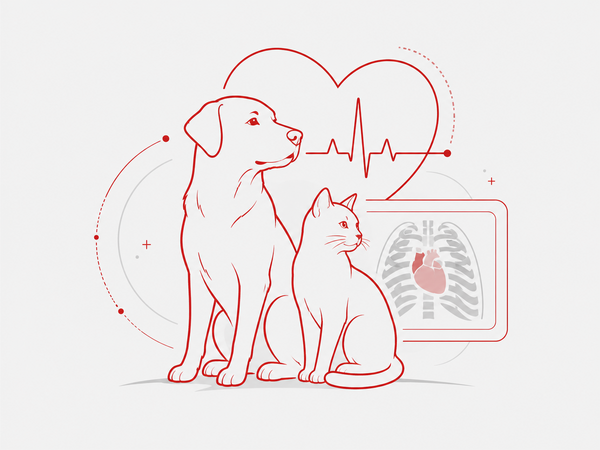
- Cardiac auscultation
- ECG Interpretation
- Thoracic radiographs
- Echocardiography
- Staging cardiac disease
- Treatment decisions
- case-based learning
- communication with clients
Good veterinary cardiology education does not replace experience. It helps organise it and gives veterinarians a framework for the cases they already see every week.
From veterinary school to confident clinical practice
Veterinary school provides the foundation: anatomy, physiology, pathology, surgery, internal medicine, clinical rotations and communication skills. Veterinary programs may differ between countries, colleges and universities, and curricula are not standardized worldwide.
But every veterinarian knows that real confidence develops over time.
After graduation, during internship, private practice, emergency work or specialist referral, the same clinical topics return again and again — often in more complex circumstances than they appeared during training.
Cardiology is a good example. Veterinary students may learn the theory of heart disease, ECG, auscultation and diagnostic tests. But in practice, the challenge is different: the patient is coughing, the owner is worried, the X-rays are not perfect, the heart sounds are difficult to interpret, and the decision still needs to be made.
That is why continuing education is so valuable. It helps turn veterinary knowledge into clinical skills.
Good cardiology education supports veterinarians in:
- Applying knowledge from veterinary school to real patients
- Reviewing clinical cases after graduation
- Connecting diagnosis, treatment and long-term management
- Understanding current trends in small animal cardiology
- Maintaining confidence in everyday decision-making
- Preparing for future cases with more structure and less stress
What our cardiology courses cover
Depending on the course, topic and speaker, our cardiology webinars and e-learning resources may cover different parts of small animal cardiology.
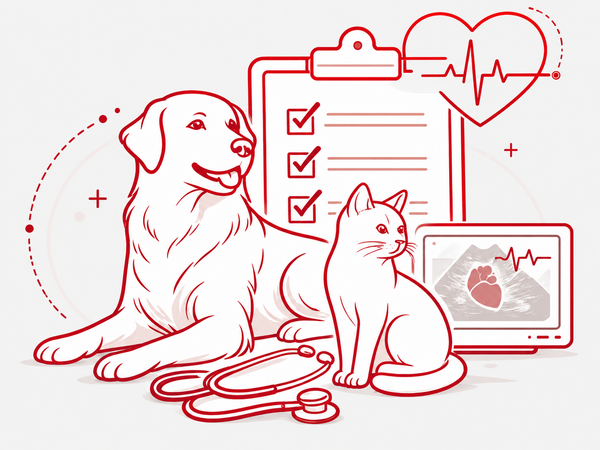
- Heart disease in dogs and cats
- Heart murmurs
- Heart failure
- Canine mitral valve disease
- Feline cardiomyopathy
- ECG and arrhythmias
- Cardiac auscultation
- Thoracic radiographs
- Echocardiography
- Cardiac ultrasound
- Heartworm disease
- Diagnosis, treatment and management
- Case-based decision-making
The focus is always practical: What does this mean for the patient? What does the veterinarian need to recognise? What should be done next?
Use all cardiology content flexibly
Would you like to watch more than just a single course and continue learning regularly? With the vet-webinar Flatrate Gold, you get access to vet-webinar content: webinars, recordings and e-learning courses — flexibly and without having to book each course individually.
This is especially useful if you want to cover several subject areas. In cardiology in particular, many questions overlap with internal medicine, diagnostic imaging, emergency medicine and feline medicine. This allows you to choose exactly the courses that fit your patients, your cases and your daily practice.
Dog breeds, risks and clinical context
Domestic dogs share a common evolutionary background with wolves, but selective breeding has created an enormous range of body sizes, skull shapes, temperaments and clinical predispositions.
Some dog breeds were historically selected for hunting, herding, guarding or companionship. These breed traits are not just interesting from an animal science perspective — they also matter in veterinary medicine.
In cardiology, breed, size, age and lifestyle can influence clinical suspicion. A breed standard is never a diagnosis, but breed knowledge may help veterinarians recognise patterns and decide which findings require closer attention.

In practice, this means looking at the whole patient:
- Breed and age
- Clinical signs
- Exercise tolerance
- Temperament and stress level
- History of collapse, cough or weakness
- Cardiac auscultation findings
- Previous diagnostic tests
- Response to treatment
- Owner observations at home
The aim is not to reduce the patient to a breed. The aim is to combine breed knowledge with clinical reasoning.
Heart disease in dogs and cats
Heart disease in dogs and cats can look very different.
In dogs, veterinarians frequently encounter murmurs, mitral valve disease, coughing, exercise intolerance, changes in respiratory rate or signs of congestive heart failure. In cats, cardiac disease may be much more subtle. A cat may show weakness, reduced appetite, weight loss, altered breathing or suddenly present in respiratory distress.
That is why cardiology education needs to cover both species carefully.
Dogs and cats are not small versions of each other. Their diseases, clinical signs, diagnostic pathways and treatment decisions often differ significantly.
From heart murmur to diagnosis
A heart murmur is often the starting point.
But the real clinical question is not only: “Can I hear a murmur?”
It is: What does this murmur mean for this patient?
A murmur may be incidental, early, progressive or clinically significant. It may require monitoring, further diagnostics or immediate action depending on the patient’s overall condition.
Useful questions include:
- How old is the patient?
- Is the animal symptomatic?
- Are there abnormal lung sounds?
- Is the respiratory rate increased?
- Is there evidence of chamber enlargement?
- Would thoracic radiographs help?
- Is echocardiography indicated?
- Does the patient need treatment now?
A good cardiology course helps veterinarians move from the sound they hear to the clinical decision they need to make.
Diagnostic tests in veterinary cardiology
Cardiology diagnostics are most helpful when they answer a clear question.
Thoracic X-rays can help assess heart size, pulmonary vessels and lung changes. ECG is essential when rhythm disturbances are suspected. Echocardiography provides structural and functional information about the heart. Blood pressure, biomarkers and laboratory testing may also play a role depending on the case.
The skill lies in choosing the right test at the right time.
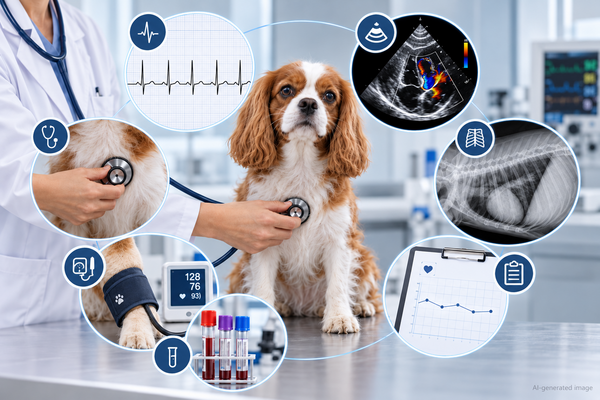
Diagnostic tests may include:
- Auscultation
- ECG
- Thoracic radiographs / X-rays
- Echocardiography
- Cardiac ultrasound
- Blood pressure measurement
- Laboratory testing
- Follow-up monitoring
The more clearly veterinarians understand what each test can and cannot answer, the more confidently they can manage cardiac cases.
Echocardiography and cardiac ultrasound
Echocardiography is one of the most important tools in veterinary cardiology.
It allows assessment of heart chambers, valves, wall thickness, contractility, blood flow and structural changes. For many patients, it is central to diagnosis and staging.
But echocardiography can also feel challenging. It requires image acquisition, anatomical orientation, measurements, interpretation and clinical context. Many veterinarians do not want to become cardiologists, but they do want to understand what they are seeing and when a finding matters.
That is exactly where practical education helps.
A good echocardiography course does not only show perfect images. It explains what matters in real patients:
- Which view am I looking at?
- Is the left atrium enlarged?
- Are the chambers normal in size?
- Is there valve disease?
- Does the finding match the clinical signs?
- Should I monitor, treat or refer?
ECG, auscultation and case management
ECG and auscultation are not old-fashioned skills. They remain essential.
Auscultation can reveal murmurs, arrhythmias, gallop sounds, muffled heart sounds or abnormal respiratory findings. ECG helps assess rhythm and electrical activity. Together with imaging and clinical findings, these tools support a more complete understanding of the patient.
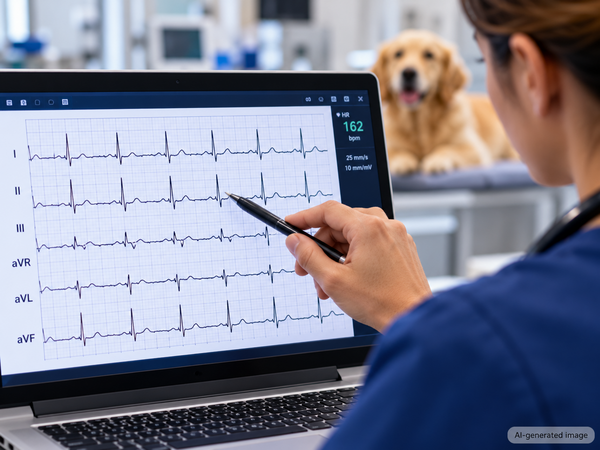
Cardiology management is not only about making a diagnosis. It is about follow-up, client advice, monitoring, medication adjustments and recognising deterioration.
Veterinarians need to know:
- What to monitor
- When to recheck
- Which signs are urgent
- How to explain disease progression
- When treatment needs to change
- When specialist input is needed
This is where continuing education can make everyday practice feel more manageable.
Heartworm disease and global cardiology relevance
Heartworm disease is another important cardiology topic, especially in a world where travel, importation and changing climates affect disease distribution.
Veterinarians may see animals from other countries, rescue dogs, travelling pets or patients with unclear respiratory and cardiac signs. Understanding heartworm disease is therefore relevant even in regions where it is not considered a routine diagnosis.
Heartworm disease connects cardiology with public health awareness, travel medicine, preventive care and client communication.
Important clinical questions include:
- Has the animal travelled?
- Could exposure have occurred in endemic countries?
- Are the signs cardiac, respiratory or both?
- Which diagnostic tests are appropriate?
- How should treatment and prevention be discussed?
Continuing education, CPD and CE in veterinary cardiology
Veterinary cardiology continuing education can range from short webinars to structured programs, specialist-led courses and advanced postgraduate training. Organizations such as ACVIM and ECVIM-CA are important in the specialist cardiology landscape, while platforms such as VIN, the IDEXX Learning Center, VetED Academy, the Cardiac Education Group and other providers offer courses, webinars or educational resources for different levels of clinical experience.
For many veterinarians in general practice, the main question is not whether they want to become a board-certified veterinary cardiologist. The question is much more practical:
- How do I recognise relevant cardiac disease earlier?
- Which diagnostic tests help in this patient?
- When should I recommend echocardiography?
- How do I manage a dog with suspected heart failure?
- When should I refer the case?
- How do I explain the diagnosis and treatment plan clearly?
At vet-webinar, our focus is practical online education for veterinarians who want to feel more confident with cardiac patients in daily practice.
For veterinarians, students and practice teams
Most cardiology content on vet-webinar is designed primarily for veterinarians in practice. Depending on the topic, it may also be useful for veterinary students, interns, residents, nurses, technicians or team members who support cardiac patients.
The level of each course is described on the course page, so participants can choose content that fits their knowledge, experience and goals.
Some courses support foundational learning. Others are designed for more advanced clinical understanding. Some focus on case management, others on diagnostics, imaging or treatment.
That flexibility matters because veterinary education does not end at graduation. Skills develop over a whole career.
Learn from experienced speakers
A good speaker does more than present slides.
They help participants understand how to think through a case. They explain why a finding matters, what can be ignored, what must not be missed and where uncertainty remains.

In cardiology, this is especially important. Small details can change the interpretation of a case:
- A subtle ECG abnormality
- A changing murmur
- A borderline chamber size
- A coughing dog with mixed respiratory and cardiac signs
- A cat that looks stable but is not
- A patient that needs referral sooner than expected
That is why we value speakers who combine knowledge, teaching skills and clinical experience.
Webinars, recordings and e-learning courses
Not every veterinarian learns in the same way, and not every practice allows time for live training.
That is why flexible access matters.
Depending on the course, vet-webinar offers:
- Live webinars
- Recorded webinars
- E-learning courses
- Case-based educational resources
- Online veterinary continuing education
This allows veterinarians to learn when it fits their schedule — after practice, between shifts, during quieter weeks or when a specific case has raised new questions.
The goal is simple: provide access to relevant cardiology knowledge when it is needed.
Clear course information before you enrol
On each course page, veterinarians can review the key information before enrolling.
This may include:
- Topic
- Speaker
- Course format
- Duration
- Level
- Price
- Access details
- Certificate or accreditation information where applicable
This transparency helps participants decide whether a course fits their current needs.
Do they want to review ECG basics? Understand echocardiography better? Improve management of heart failure? Explore heartworm disease? Prepare for more confident case discussions?
The right course should answer a real clinical need.
Cardiology education that supports better patient care
Good cardiology education should make veterinary medicine feel more connected.
A coughing dog, a cat with respiratory distress, a new murmur, an abnormal ECG, an enlarged heart on X-ray or a suspicious echocardiographic finding should not feel like isolated problems. They should become part of a clinical pattern that the veterinarian can assess with more confidence.
That is what we want continuing education to support:
- better clinical reasoning
- better diagnostic choices
- better treatment decisions
- better communication
- better long-term patient care
And ideally, more enjoyment in learning medicine.
Frequently asked questions
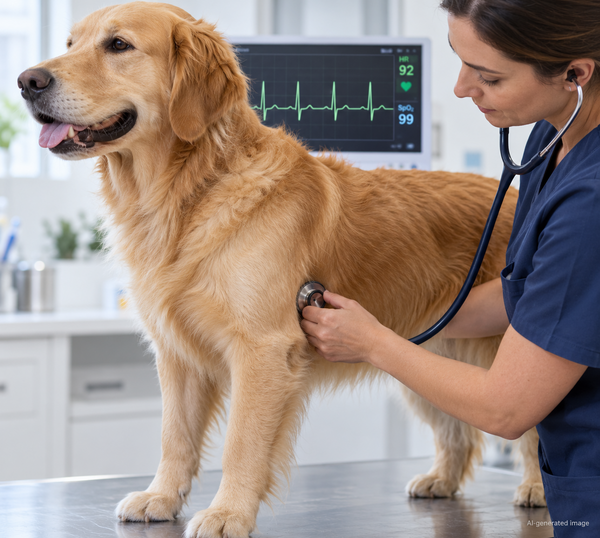
Discover veterinary cardiology courses at vet-webinar
If you want to strengthen your knowledge in veterinary cardiology, explore our online courses, webinars and e-learning resources for small animal practice.
Whether you are interested in heart disease in dogs and cats, echocardiography, ECG, heart failure, cardiac diagnostics, heartworm disease or practical case management, vet-webinar offers flexible education that fits into real veterinary life.
Choose the cardiology course that matches your current questions, your patients and your practice.