Webinars & e-learning courses All webinars

Working with Raw Fed Pets

Working with Raw Fed Pets

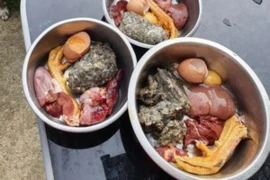
Raw Feeding continues to be a controversial topic for many, but with a four-fold increase in owners feeding raw food since 2008 (66% percent of owners reported that part of their pets' regular food was 'Raw Food') we need to find constructive ways of working with raw fed pets and their owners.
This webinar provides a well-evidenced and non-biased overview of different ‘models’ of raw feeding (with their up and downsides), and a sensible and well evidenced discussion of the potential pros as well as the potential cons of raw feeding in general.

By the end of this seminar you will be able to speak confidently with your raw feeding owners, and will place yourself in the best possible position for identifying when raw food is (and importantly - when it isn’t) contributing to the clinical picture in front of you. 

Recording from 11 February 2022

Speaker:

Screen Shot 2021-10-02 at 22.31.59.jpg

Charlotte Gray

Dr Charlotte Gray MA (hons) VetMB MRCVS

I am a 2009 Cambridge University Veterinary School Graduate that has spent much of the first decade of my career working in general mixed practice with a developing interest in the field of nutrition, in particular taking an evidence based approach to fresh/whole food feeding. I now work almost exclusively in fresh food formulation for individual pets with nutrition responsive medical conditions and for commercial pet food companies working with fresh foods in the UK, USA, Canada, Spain and India. I sat on the 2020 PFMA Veterinary Nutrition Committee and Raw Pet Food Committees, and I teach formulation courses for both owners and veterinary professionals in several countries. I have a passion for improving the challenging relationships between the veterinary and raw feeding communities by helping us to better understand each-other in the knowledge that excellent communication is key to optimal veterinary care.
Booking information

Duration: 0:54 h
Speaker: Charlotte Gray
from 1
54.90 US$
(incl. tax)

You might also be interested in

parenteral-nutrition-for-small-animals-for-nurses.png
Samantha Livingstone
0:46 h

Parenteral Nutrition for Small Animals (for Nurses)

Nutrition is an integral part of every day functioning in healthy patients, and it plays an even larger role in our critical patients. Nutrition is required for energy production, protein synthesis and repair of damaged tissue. This webinar will focus specifically on parenteral nutrition in small animal patients, including partial and total parenteral nutrition.
diagnosis-of-food-allergy-in-dogs-CL1460110259.jpeg
Chiara Noli
0:39 h

Diagnosis of food allergy in dogs

The main steps in diagnosing food allergy in dogs are the exclusion other differential diagnoses, the administration a correct elimination diet for a suitable amount of time and the interpretation of the results of the diet trial. Advanta-ges and disadvantages of other diagnostic tools, such as the intradermal skin test or the serological test, the patch test, the gastroscopic test will be discussed. Useful tips on how to chose the most suitable hypoallergenic diet and how to improve compliance during the diet trial will also be offered.
dietary-support-for-gastrointestinal-diseases-1.jpeg
Nick Cave
1:02 h

Dietary support for gastrointestinal diseases

No other organ system is so immediately and profoundly affected by diet than the gastrointestinal tract, and there are few acute or chronic diseases where dietary manipulation is not an important component of the diagnostic approach and management. This webinar will provide an update on feeding trials as a diagnostic tool, how key dietary components interact with the GI tract, the impact of diet on the bacteriome, and will discuss the specific management of some key diseases including pancreatitis, constipation, and severe gastroenteritis.