Webinars & e-learning courses All webinars

Approach to canine mast cell tumours and soft tissue sarcomas

Approach to canine mast cell tumours and soft tissue sarcomas

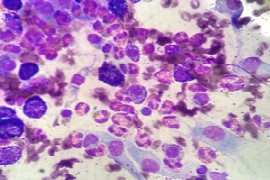
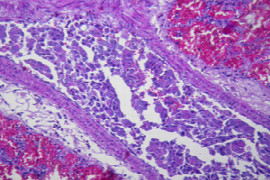
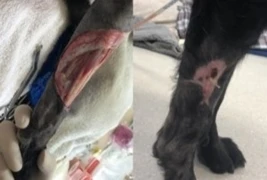
Mast cell tumours (MCT) and soft tissue sarcomas (STS) are some of the most common tumours encountered in small animal practice. Although surgical removal is often the most appropriate initial treatment, questions like whether or not to perform staging tests prior to surgery, identification of cases where surgery may not be recommended, treatment options for non-surgical cases, interpretation of prognostic factors and the best approach for follow up can be more challenging. In this webinar we will discuss initial diagnosis of canine MCT and STS, when and which staging tests are appropriate for different cases, interpretation of histopathology reports and grading schemes, and non-surgical treatment options. We will discuss in more depth the use of receptor tyrosine kinase inhibitors such as Palladia in canine MCT.

This webinar is sponsored by ASAP Laboratory.

Recording from 31.07.2018

Speaker:

Claire_Canonn_portrait_photo.jpg

Claire Cannon

BVSc (hons), DACVIM (Oncology), MANZCVS

Claire graduated from the University of Melbourne in 2003 and spent several years in general practice in Australia and the United Kingdom before deciding to specialise. During her internship, she worked veterinary oncologists for the first time and realised that there are always options for animals with cancer, ranging from surgery, radiation therapy and chemotherapy to palliative or comfort care, and she decided that oncology was the career path for her. She moved to the United States in 2009 to undertake a residency in veterinary oncology at the University of Minnesota. She became board certified in 2013 and went on to undertake additional training in research. She was an Assistant Professor at the University of Tennessee from 2013-2015 and the University of Minnesota from 2015-2017. She has authored multiple peer-reviewed journal articles and presented her research at several international conferences. Claire is delighted to be home in Australia and at U-Vet Animal Hospital. She is passionate about providing excellent care to all animals with cancer, and their owners, with a focus on maintaining the best quality of life possible for her patients. She is also excited to contribute to the training of our future veterinarians and to continue her research.

Booking information

Duration: 1:03 h
Speaker: Claire Cannon
from 1
54.90 US$
(inkl. tax)

You might also be interested in

300x200.jpg
Momoko Ito
0:53 h

Nursing the end-stage cancer patient 

As veterinary patients age, they are more susceptible to diseases and cancer. This webinar will cover the basic cancer biology, treatment options and palliative care... 
tumor-grading-and-prognosis-in-veterinary-practice-1.jpeg
Sara Belluco
0:44 h

Tumor grading and prognosis in veterinary practice

Tumors are quite frequent in companion animals, with malignant forms representing 56% of all the tumors in dogs and 80% in cats. Predicting the survival time and treatment response for malignant tumors is necessary to evaluate the best care options for the animal. Histological tumor grading helps veterinarians to define the prognosis, but each tumor has its own grading system with different prognosis, in terms of survival rate, metastatic rate, recurrence incidence. It could be not so easy to get your bearings in the pathologic words of gradings. The goal of this seminar is to be able to correlate the validated prognosis to each tumor grading we will see. We will rapidly review what tumor grading is and how it is evaluated. Then we will spend some time to review some of the most important tumor gradings (mammary tumors, mast cell tumors, melanomas, soft tissue sarcomas) and the correlated and validated prognostic factors. At the end of the seminar you will be able to clearly understand your pathologist’s report based on the grading system, and to use it to give an appropriate prognosis to the owners.
ICC image small.jpg
Sue Jaensch
0:50 h

Advanced diagnostics in canine and feline lymphoma.

So you have a diagnosis of lymphoma in your small animal patient. What next?  Classification of lymphoma is increasingly important for both prognostic and therapeutic decision making. This webinar will discuss diagnostic options to optimise the diagnostic process in your patient.  Modalities discussed will include immunocytochemistry, immunohistochemistry, flow cytometry and PARR.