Webinars & e-learning courses All webinars

Tumor grading and prognosis in veterinary practice

Tumor grading and prognosis in veterinary practice

Tumors are quite frequent in companion animals, with malignant forms representing 56% of all the tumors in dogs and 80% in cats. Predicting the survival time and treatment response for malignant tumors is necessary to evaluate the best care options for the animal. Histological tumor grading helps veterinarians to define the prognosis, but each tumor has its own grading system with different prognosis, in terms of survival rate, metastatic rate, recurrence incidence. It could be not so easy to get your bearings in the pathologic words of gradings.

The goal of this seminar is to be able to correlate the validated prognosis to each tumor grading we will see. We will rapidly review what tumor grading is and how it is evaluated. Then we will spend some time to review some of the most important tumor gradings (mammary tumors, mast cell tumors, melanomas, soft tissue sarcomas) and the correlated and validated prognostic factors. At the end of the seminar you will be able to clearly understand your pathologist’s report based on the grading system, and to use it to give an appropriate prognosis to the owners.

Recording from 09.07.2019

Speaker:
Sara_Image.jpg

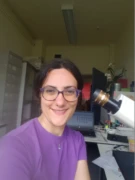
Sara Belluco

DVM, PhD, ECVP, Dipl. DESV
I am a veterinary pathologist working at the veterinary school of Lyon. I graduated in 2002 from the veterinary school of Milan (Italy) and I gained a PhD in pathology of laboratory animals in 2005. After completing a residency program at the veterinary school of Nantes (France), in 2009 I obtained the ECVP diploma. Since 2009, I have been working as assistant professor in pathology at the veterinary school of Lyon (France). Here I am in charge of undergraduate teaching (inflammation, nervous and genital system pathology, necropsies), I am supervisor of residents in pathology and I participate in pathology formation of residents in oncology and internal medicine. I perform histological analysis on samples coming from our teaching hospital, especially tumors, since our oncology service is the only one present in this region.  Since the beginning of my career my main field of interest is comparative oncology. I worked on several spontaneous and induced animal models. At the moment, I coordinate an European program to evaluate the canine nervous system tumor classification and grading and I work on several canine spontaneous tumors to study the immune microenvironment and its impact on therapy and prognosis.

Booking information

Duration: 0:44 h
Speaker: Sara Belluco
from 1
57.60 US$
(inkl. tax)

You might also be interested in

Extravaganza_Website_4Sponsoren.png
Sue Ettinger
2:57 h

LIVE-STREAM: EXCLUSIVE ONCOLOGY VETGRUPPEN CONFERENCE

Revolutionizing Veterinary Oncology – Innovations You Can Use Today! 

Join VetGruppen Germany for an exclusive, cutting-edge event where veterinary oncology meets real-world practice. Discover the latest breakthroughs in cancer detection, treatment, and patient care—designed to elevate your clinic’s oncology expertise.


chemotherapy-precautions-and-safety-why-how-and-what-to-do-for-nurses-1.jpeg
Momoko Ito
0:45 h

Chemotherapy Precautions and Safety - Why, How and What to do (for Nurses)

Cancer frequently affects our veterinary patients and in recent years chemotherapy has become more commonly utilised treatment. General practices are increasingly prescribing and administering chemotherapy drugs. Chemotherapy drugs are toxic to cells (cytotoxic) interfering with the normal cell life cycle which results in cell death. Cancer cells are targeted by these drugs however they are not specific for cancer cells and healthy tissue can be affected. Chemotherapy drugs are also carcinogenic, mutagenic, teratogenic and abortifacient. It is important that these drugs are handled safely. Personnel handling of chemotherapeutic drugs have been found to have increased risks of infertility, early pregnancy loss or urinary excretion of these drugs. This webinar will discuss the safety precautions necessary for handling chemotherapy agents and will focus on the recent consensus guidelines produced by the American College of Veterinary Internal Medicine (ACVIM) in January 2018 to raise awareness of risks and how we can reduce the exposure within clinics. If time permits, common side effects (neutropaenia, thorombocytopaenia and gastrointestinal side effects) caused by chemotherapy will be explained as well as precautions for handling such patients.
paraneoplastic-syndrome-1.jpeg
Valerie J. Poirier
0:45 h

Paraneoplastic Syndrome

Cancer can do anything..... Paraneoplastic syndrome are symptoms that occur at sites distant from a tumour or its metastasis. During this seminar, we will explore the categories of paraneoplastic syndromes and explain the mechanisms of those where it is elucidated. We will look at the comparative aspect of paraneoplastic syndrome in human medicine.