Webinars & e-learning courses Intermediate All webinars

Unbreak my heart – managing cardiac emergencies

Unbreak my heart – managing cardiac emergencies

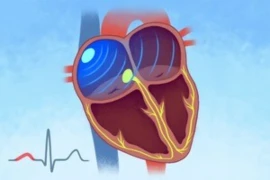
The presentation will focus on the following commonly encountered cardiac emergencies:

  • Differentiation of congestive heart failure from non-cardiac causes of respiratory distress and management of congestive heart failure
  • Diagnosis and management of pericardial effusion
  • Diagnosis and management of haemodynamically significant arrhythmias

The learning outcomes will be:

  • To describe the methods available for differentiation of cardiac from non-cardiac causes of respiratory distress
  • To explain the pathophysiological basis of treatments used to manage congestive heart failure
  • To explain the pathophysiology of pericardial effusion and describe its management
  • To list treatment options for ventricular tachycardia, ventricular fibrillation and supraventricular tachycardias.

Recorded 9 July 2024

Speaker:

Melanie.jpg

Melanie Hezzell

MA, VetMB, PhD, CertVDI, CertVC, FHEA, MRCVS, DipACVIM (Cardiology)

Melanie is a University of Cambridge graduate. While working in primary care practice, she gained the Royal College of Veterinary Surgeons Certificates in Veterinary Diagnostic Imaging and Veterinary Cardiology. Following a rotating small animal internship at the Royal Veterinary College, she undertook a PhD on the epidemiology of canine myxomatous mitral valve disease at the same institution. After completing a cardiology residency at the University of Pennsylvania, she joined the University of Bristol, where she is currently Professor of Veterinary Cardiology.

Booking information

Duration: 0:55 h
Speaker: Melanie Hezzell
from 1
57.60 US$
(inkl. tax)
You might also be interested in

feline-heartworm-disease-for-nurses-1.jpeg
Maggie Fisher
0:44 h

Feline Heartworm Disease (for Nurses)

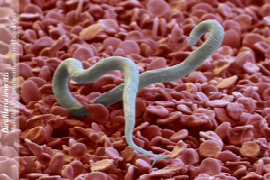
Feline heartworm disease, caused by Dirofilaria immitis worms, is a good example of where a cat is definitely not a small dog. Infection in dogs tends to be better tolerated, the adult worms are more likely to reach patency and diagnosis and treatment are (relatively) easier than in cats. The reasons for these differences, what can be done to ensure cats avoid this infection and measures to take when cats have the infection will be explored in this webinar. The webinar will also provide an update on heartworm infection in the US, where resistance to heartworm preventives is evolving while researchers seek to understand the factors that led to the genesis of resistance and new solutions, whilst heartworm infection continues to spread. The implications that climate change may have on the epidemiology of heartworm disease will be explored.
Slow and unsteady image (1).jpg
Andrew Fisher
0:33 h

Slow and unsteady - Understanding bradyarrhythmias for Nurses

In this presentation Andrew Fisher aims to give an overview of bradyarrhythmias for nurses who work in general practice.
Indications_for_mechanical_ventilation_300x200_1_300x200.png
Corrin Boyd
0:54 h

Indications for Mechanical Ventilation

This session with Corrin Boyd covers the basic principles on the use of mechanical ventilation in small animal critical care