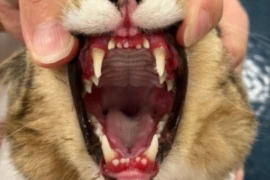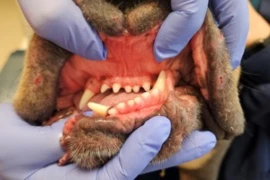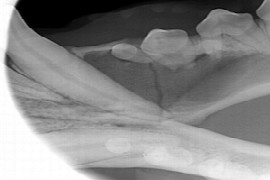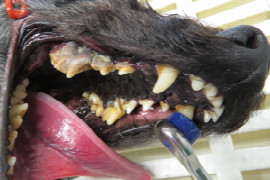
'Periodontal' comes from two Greek words that mean 'around the tooth.' Periodontal disease is associated with the inflammation and loss of the deep supporting structures of teeth. A number of criteria are used to assess the oral health of a dog and assign a grade. These include the amount and distribution of plaque and calculus, health of the gingiva (gums), radiologic appearance, and the depth of pockets.
Recording from 12.06.2018
Speaker:
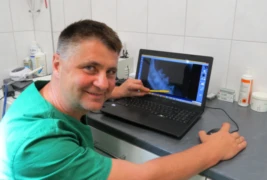


Camil Stoian.
DDr. Camil Stoian, DMD, DVM, PhD, Diplomate EVDC
Dr. Stoian received both his veterinary(DVM) and human dental degree (DMD) from the University of Veterinary Medicine and Human Dental Medicine in Cluj-Napoca, Romania as well as his Ph.D. from the Surgery Department of the Veterinary Medicine Faculty in Cluj-Napoca with the Title “Personal research of Dental implants in Dogs”.
He worked 5 years at the Faculty of Medicine (Human) of the University of British Columbia in Vancouver, Canada managing an Animal Research Facility. Soon after graduating Dental Medicine he began a 3-year residency program with Prof. Dr. Karl Zetner, the pioneer of veterinary dentistry in Europe.
Since 2007 he is a European Veterinary Dentistry Specialist (Diplomate EVDC) and is presently running the Veterinary Dental Center in Vienna, Austria
Main author of 2 Veterinary Dental Books also published the first book of this specialty in Romania, author of over 40 publications in Austria and abroad. Dr. Stoian is a world recognized lecturer, his area of expertise spread in over 15 countries all over the world including USA, Trinidad and Tobago, Thailand, Germany, Romania, Turkey, Bulgaria, Hungary, Portugal, etc. in 4 different languages (German, English, Hungarian, Romanian).
His main areas of interest within veterinary dentistry are with Orthodontics, Maxillo-facial surgery and reconstruction as well as osteo-inductive and conductive material research.
He worked 5 years at the Faculty of Medicine (Human) of the University of British Columbia in Vancouver, Canada managing an Animal Research Facility. Soon after graduating Dental Medicine he began a 3-year residency program with Prof. Dr. Karl Zetner, the pioneer of veterinary dentistry in Europe.
Since 2007 he is a European Veterinary Dentistry Specialist (Diplomate EVDC) and is presently running the Veterinary Dental Center in Vienna, Austria
Main author of 2 Veterinary Dental Books also published the first book of this specialty in Romania, author of over 40 publications in Austria and abroad. Dr. Stoian is a world recognized lecturer, his area of expertise spread in over 15 countries all over the world including USA, Trinidad and Tobago, Thailand, Germany, Romania, Turkey, Bulgaria, Hungary, Portugal, etc. in 4 different languages (German, English, Hungarian, Romanian).
His main areas of interest within veterinary dentistry are with Orthodontics, Maxillo-facial surgery and reconstruction as well as osteo-inductive and conductive material research.
Booking information
Duration:
0:44 h
Speaker:
Camil Stoian.
from 1
54.90 US$
(incl. tax)